

How Saurabh Bhatt Scaled Supportsoft to $1.3M Empowering SMEs with Scalable Tech
In this interview, Saurabh Bhatt, Co-Founder of Supportsoft Technologies, shares how he scaled the company to $1.3M in annual revenue by making practical, scalable technology accessible to small and mid-sized businesses. From building early relationships through trust to evolving into subscription-based and AI-driven solutions, his journey shows you how disciplined execution, strong teams, and operational focus compound into sustainable growth over time.
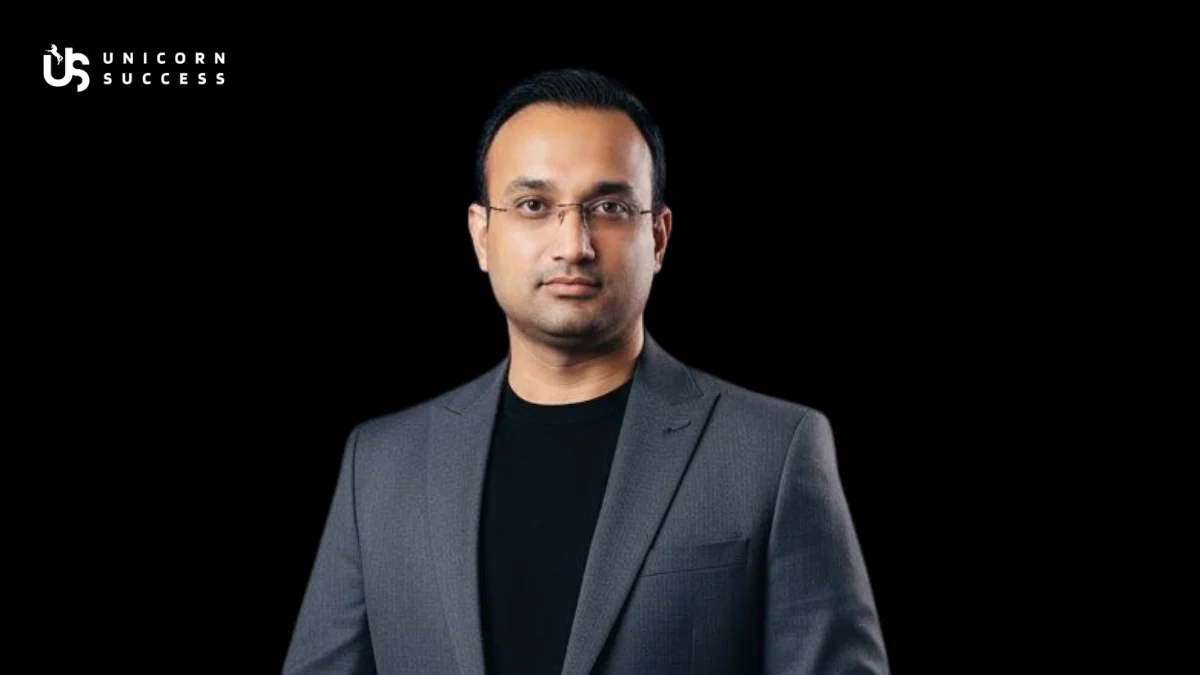
1. Tell us your name, your company name, and what your business does.
I’m Saurabh Bhatt, co-founder of Supportsoft Technologies Pvt. Ltd., a company focused on providing assistance to small- to medium-sized businesses by offering help with core operations and technology challenges through custom-developed software, custom-developed applications and AI-derived solutions.
The core principle behind Supportsoft is very simple: technology must be accessible to everyone regardless of the size of their company and must be practicable and scalable.
2. What inspired you to start this business?
What inspires us at Supportsoft is our core belief – technology from somewhere like Supportsoft needs to be accessible, practical and scalable, and that technology should be affordable for every business, not just large businesses that can spend lots of money on technology.
On my quest to build Supportsoft, the idea that there existed a huge market gap is what continually motivated me, as I consistently witnessed high-end marketing agencies serving exclusively large-sized clients with budgets inordinate to mine. At the other end, there were low-cost providers who often compromised on quality. In the middle—where startups, freelancers, and growing businesses lived—there was very little reliable support.
These businesses needed good resources, flexible pricing, and partners who actually understood their constraints. But they were being overlooked. That’s where Supportsxoft came in. From day one, my goal was to act as a bridge—connecting ambitious businesses with the right technical resources, without forcing them into enterprise pricing or unreliable delivery.
3. Did you have a background in this industry before starting out?
Before starting my company, I had already spent years in the industry. I began my career at General Electric, working at the ground level, which taught me discipline, process, and how large systems really operate.
I then moved to Dell Computers, where I worked as a product manager in the XPS product line and was deeply involved in software innovation. After that, I worked with IBM, where my exposure to enterprise-scale technology and structured execution expanded even further.
Those experiences influenced me more than any book on startups could have. It showed me how products are developed, how teams work together, and how technical decisions have an impact on the actual business. So, when I was ready to start SupportSoft, I wasn’t just taking a shot in the dark. I used years of experience to solve a problem that I understood very well.
4. How did you land your first few customers or clients?
Getting the first few customers is always the hardest part, and I won’t pretend there was a magical growth hack involved. After moving to the United States for about two years, I focused almost entirely on building relationships. I attended meetups, spoke to founders, connected with small business owners, and simply listened. Instead of aggressively selling, I tried to understand what people were struggling with—and where technology could genuinely help.
Those conversations turned into contacts. Contacts turned into referrals. And referrals slowly turned into our first clients. In the past, the most important thing was trust, rather than branding. When we were working together, people connected and identified with us because they could see and relate to who we were rather than the fact we were larger than life.
5. What was your business model when you started—and has it changed over time?
Initially, our business model was very straightforward. We worked on desktop-based software projects, priced largely on a project or service basis. But as we grew and better understood our clients’ needs, we realised something important: SMEs don’t want unpredictable tech costs. So we evolved.
We transitioned towards a subscription and milestone-based model, especially for software and AI-driven solutions. This gave our clients clarity, flexibility, and ongoing support—while giving us predictable revenue and deeper long-term relationships. That shift alone changed the stability of the business.
Also Read: How Louis Ducruet Scaled Eprezto Into a $1M+ Online Insurance Company in Just 2 Years
6. What was your exact timeline to $1 million in revenue?
Our revenue trajectory of $1 million developed over the course of approximately three years based on an intentional and methodical approach of learning through experimentation – developing and solidifying our business model for long-term client success versus taking a “growth at all costs” mentality – while developing our team, establishing efficient delivery capabilities and creating a solid foundation for a long-term sustainable business.
7. What was the biggest turning point in your growth journey?
The arrival of COVID-19 was a massive change for the world as we know it. There was a great deal of pain associated with the pandemic, but the pandemic acted as an accelerator of digital growth for local businesses across Australia. Many businesses had been delaying adopting change via digital transformation until they were forced to take action due to the pandemic.
New solutions such as software, applications, automation, and online systems had now become part of a business’ “must-haves” versus “nice-to-haves”. Because of our established relationship with being a local, flexible, and trusted technology partner to our clients in Australia, the need for our services during this change was heightened. Business wanted to work with a local technology partner who could work quickly and understand their unique challenges; we were prepared.
From a marketing perspective, the marketing channels that worked best during this period were partnerships and paid marketing.
Partnership relationships with existing clients opened up new opportunities to gain new clients. Paid marketing provided us with the opportunity to connect with businesses that were looking for solutions and needed them immediately. We experienced organic growth and referrals through consistent delivery of services that were available to all of our clients.
8. What marketing channels or strategies worked best for you in getting to $1M?
We had success from a marketing standpoint using both partnerships and paid-for advertising. Partnerships gave us access to clients who already trusted someone else’s business, allowing for shorter sales cycles and better conversion rates. Our company was able to use paid advertising to find a great number of businesses wanting to purchase IT solutions; these clients were the highest quality leads possible.
As we continued to deliver solid products and to do excellent work, many people began recommending our company to others. Positive delivery of service created advocates for the company, and word of mouth has become an important engine for growth over time.
9. What were the top 3 challenges you faced while scaling—and how did you overcome them?
We faced the following three primary hurdles when scaling:
- Hiring qualified personnel: It was ultimately difficult for us to hire; unfortunately, letting go of a particular few team members turned out to be one of my greatest lessons learned throughout my journey into entrepreneurship.
- Effectively managing cash flow: It was another constant challenge. When you’re growing, expenses often come before revenue. You need discipline, forecasting, and patience to avoid making emotional decisions.
- Developing scalable operations: Strengthening our operational systems and processes has enabled the business to continue to operate seamlessly as we’ve expanded our team.
10. Was there a moment you felt like quitting? How did you push through it?
One thing people often ask me is whether I ever felt like quitting. Honestly? No. I never had a single moment where I thought of giving up completely. I have faced many challenges, had many stressful days and made many difficult choices over the years, but I always felt those problems would be solved eventually as long as I remained committed to solving them.
11. What’s one mistake you made early on that taught you something invaluable?
When I started out as a business professional, I cut out a lot of key people on my team at the start. I needed to focus on the immediate problems I had to solve at that moment. I later realised that stability (both in the organisation and from a knowledge standpoint) was a critical component as I continued to build a company to grow.
This taught me how to hire wisely, invest in my employees, and consider the overall strength of my team in the long term instead of just looking for a quick fix.
Also Read: How Nirmal Gyanwali Scaled WP Creative Into a $1M+ Web Performance Agency
12. What’s one thing about hitting your first $1M that no one talks about?
Here’s something most founders won’t tell you openly: hitting your first $1M costs you time—especially family time. When the business is growing, it demands attention constantly. Even when you’re physically present at home, your mind is often still working. That’s the uncomfortable truth.
13. How did your role evolve as the business grew?
My responsibilities have changed significantly as Supportsoft Technologies has grown; I used to be involved in every aspect, but now I am less involved in the day-to-day operations of the company and have taken on a more strategic role. I shifted from execution to system-building, delegation, and decision-making.
14. If you had to start over from scratch, what would you do differently?
If I tried to do everything myself, the business wouldn’t scale—and neither would I. If I had to start again from scratch, I would invest much more in IT infrastructure and talent from day one. Strong foundations make everything easier later.
15. Where is your company today—and what’s next?
Currently, Supportsoft Technologies has expanded to approximately 40 full-time employees and $1.3 million in annual revenue, along with an order backlog of approximately $2.1 million. Our main focus areas are developing scalable applications, custom-developed software, and AI-based technologies that help small to medium-sized companies develop digital products.
The goals of Supportsoft Technologies moving forward are to enhance the quality of hiring and training within our organisation, elevate our technical competencies, and deliver solutions at a consistently high level that will contribute to the long-term growth of our customers.
16. What are you currently obsessed with or optimizing in your business right now?
At this moment in time, I am focused on enhancing the talent and skill set of my organisation. This includes hiring individuals who possess superior technical abilities, making greater investments in training, and creating a skills-based team capable of continuously producing high-quality results while we experience growth. I think the combination of new people and great processes will help us develop into the next phase of our business.
17. Do you still feel connected to the mission that started it all? Why or why not?
Yes. I still have a deep connection to our original vision, which was to provide support for companies of all sizes, and especially those who are trying to find the right technology partner. Our vision has not changed; we have only increased in scale since inception.
Our vision when we started has not changed; we still want to build and develop practical, reliable solutions for businesses to solve their actual challenges and to enable them to grow their business with confidence!
18. What’s your best piece of advice for entrepreneurs who are trying to hit their first $1M?
The recommendation I give is that at early stages, you should be very diligent about developing a good team and getting all the necessary skills in place. The right staff will produce good quality results and good quality results build trust, repeat customers and referrals. Once you have established consistency and executions, you will see revenue—no shortcuts.
Having the proper process and personnel will ensure that when you achieve your first $1 million, it is a consequence of building the right things, not because that is what you were attempting to do.
19. Any books, habits, or tools that played a key role in your success?
Personally, practising yoga and meditation helps me remain focused, disciplined, and mentally balanced throughout periods of stress and pressure. I also read a variety of self-help and leadership books regularly to develop my ability to make good decisions, maintain a positive mindset, and think long-term.
However, consistent habits around learning and self-reflection have been the most beneficial factors for my success overall.
20. Anything else you’d like to share with our readers?
While growth is significant, being able to balance out where you are growing/moving quickly versus where you are not growing/not able to progress is equally important in not only maintaining discipline in your growth but also ensuring that you have the appropriate approach to health and belief, as well as continuing to keep the people you work with as your focus.
Be persistent in your continuing education and have the intent to remind yourself of why you have chosen this course of action in the first place. To be inspired is not a one-time action; rather, you need to be continually inspired and reaffirmed while doing so.
Also Read: How Divya Gugnani Scaled 5 SENS to a $1M+ Fragrance Brand in Its 1st Year
👉 Inspired by Saurabh Bhatt’s journey building Supportsoft Technologies into a $1.3M+ tech solutions company—by making enterprise-grade technology accessible, investing in strong teams, and focusing on disciplined execution? Share this story with a fellow founder. It might be the push they need to build something sustainable.
At Unicorn Success, we spotlight fearless founders and Zero to Million . Have one of your own? Submit it through our Contact form—your journey could inspire entrepreneurs around the world.
