How to Start a Gastroenterology Clinic in 2026
Starting an independent gastroenterology clinic requires more than medical expertise. Doctors must plan their services, arrange suitable premises, estimate investment,…
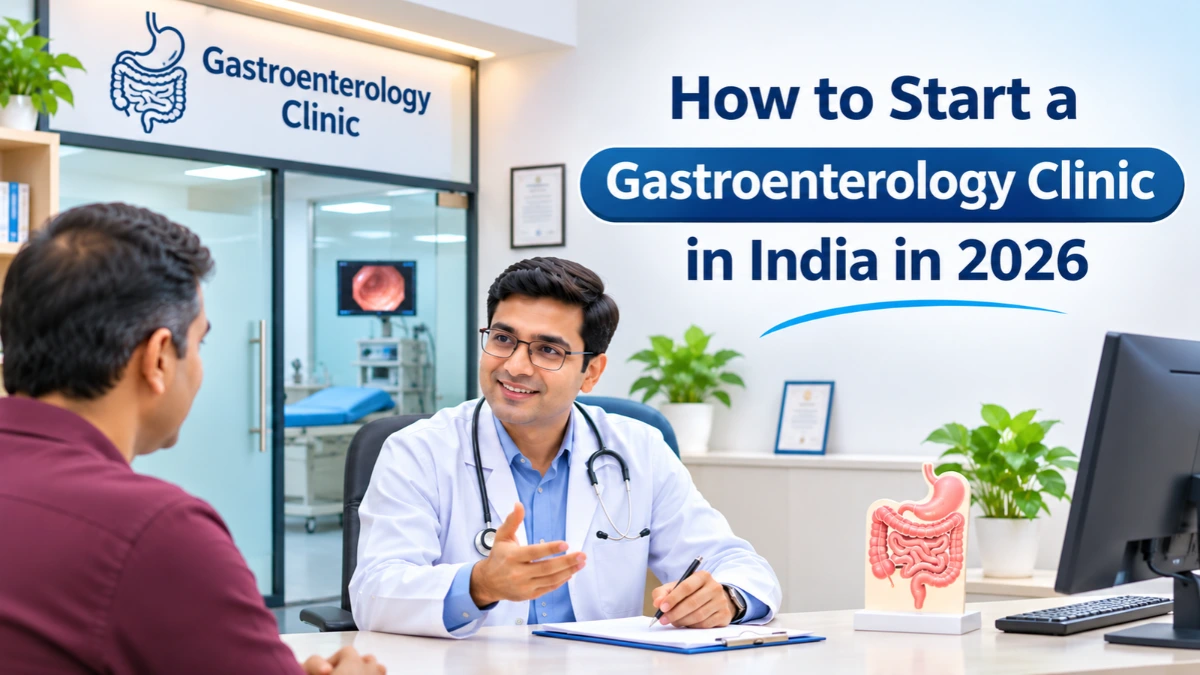
Starting an independent gastroenterology clinic requires more than medical expertise. Doctors must plan their services, arrange suitable premises, estimate investment, understand registration requirements, purchase appropriate equipment, and establish systems for patient safety.
A consultation-only clinic has different requirements from a facility offering upper GI endoscopy and colonoscopy. The latter needs specialised infrastructure, trained personnel, instrument-reprocessing facilities, patient monitoring, and emergency arrangements.
If you are planning to open a gastroenterology clinic in India in 2026, understanding these requirements can help you make informed decisions and avoid unnecessary expenditure.
1. Decide Which Type of Clinic You Want to Establish
Before investing in a property or equipment, decide which services your clinic will provide.
There are three common practice models:
- Consultation-only clinic: Provides specialist consultations, medical evaluation, prescriptions, and follow-up care. Investigations can be arranged through external facilities.
- Consultation and diagnostic clinic: Combines consultations with selected diagnostic services, depending on infrastructure and applicable permissions.
- Gastroenterology clinic with endoscopy: Offers procedures such as upper GI endoscopy and colonoscopy, requiring dedicated facilities, trained staff, and appropriate safety arrangements.
Starting with consultations and expanding according to clinical demand may help specialists control their initial investment.
2. Research Local Demand and Select a Suitable Location
Location influences patient accessibility, rental expenses, and referral opportunities. Research nearby hospitals, diagnostic centres, existing specialist clinics, and emergency facilities before selecting a property.
For doctors planning a gastroenterologist clinic in Patna, accessibility from residential areas, nearby hospitals, parking, and connections to surrounding districts are important considerations.
Before finalising a property, evaluate:
- Road connectivity and public transport.
- Parking and patient accessibility.
- Nearby hospitals and diagnostic centres.
- Monthly rent, deposit, and maintenance.
- Adequate ventilation, electricity, water, and sanitation.
- Suitability of the premises for the proposed medical services.
For an endoscopy facility, additional space is necessary for procedures, instrument reprocessing, and patient recovery.
3. How Much Does It Cost to Start a Gastroenterology Clinic?
Investment depends on the clinic’s location, size, equipment, staffing, and services. A consultation-only practice generally costs less to establish than an endoscopy centre.
The following is an illustrative budget for a modest rented consultation clinic, not a verified Patna market quotation.
| Expense | Estimated allocation |
| Property deposit and advance rent | ₹1,20,000 |
| Interiors and electrical work | ₹2,00,000 |
| Furniture and examination area | ₹1,00,000 |
| Basic medical equipment | ₹1,20,000 |
| Computer, printer and software | ₹50,000 |
| Safety supplies and consumables | ₹50,000 |
| Registration assistance | ₹40,000 |
| Contingency | ₹70,000 |
| Total | ₹7,50,000 |
Working capital should be maintained separately. For example, if monthly fixed operating expenses are ₹1.5 lakh, a three-month reserve would require ₹4.5 lakh. The illustrative initial funding requirement would therefore be ₹12 lakh.
Actual costs should be confirmed through local property assessments and supplier quotations.
What about endoscopy equipment?
An endoscopy facility requires substantially greater investment. An ESIC procurement document dated 26 December 2025 estimated ₹1.05 crore, excluding GST and comprehensive maintenance charges, for a specified HD video endoscopy system covering upper and lower GI applications. This is an institutional procurement benchmark, not a universal private-clinic equipment price. [1]
Before purchasing equipment, compare supplier quotations, maintenance expenses, warranty, installation, and service availability. Partnering with established diagnostic facilities may be more practical during the initial stage.
Calculate your break-even point
Break-even analysis helps estimate the consultations required to cover monthly expenses.
Break-even consultations = Monthly fixed expenses ÷ Contribution per consultation
For example, if fixed expenses are ₹1,50,000 and the average contribution per consultation is ₹500, the clinic needs approximately 300 consultations monthly, or 12 per working day over 25 days.
This is an illustrative calculation, not a guarantee of profitability.
4. Independent Clinic or Hospital-Based Practice?
An independent clinic provides greater control over consultation timings, administration, staffing, and daily operations. However, the doctor must independently arrange infrastructure, equipment, emergency referrals, and applicable registrations.
Hospital-based practice may provide access to existing diagnostic services, endoscopy facilities, inpatient care, and emergency support.
Doctors with limited initial capital may consider hospital-based consultations before establishing a larger independent facility. Professional agreements, revenue-sharing arrangements, and clinical responsibilities should be reviewed carefully.
5. Plan Infrastructure, Equipment and Staffing
A consultation-based clinic generally needs a reception area, waiting space, private consultation room, examination couch, storage, and sanitation facilities.
An endoscopy facility requires additional arrangements, including:
- Dedicated procedure room.
- Patient preparation and recovery areas.
- Endoscopy equipment and compatible accessories.
- Suction and patient-monitoring systems.
- Scope cleaning and high-level disinfection facilities.
- Separate arrangements for used and reprocessed instruments.
- Emergency equipment and referral support.
Endoscopes require proper cleaning, disinfection, drying, and storage between patients. Reprocessing procedures should follow manufacturer instructions and applicable infection-prevention guidance. [2]
Equipment and staffing should match the services offered. A consultation clinic may require a receptionist and appropriate clinical support personnel, whereas an endoscopy unit needs trained nursing and technical staff, with qualified sedation or anaesthesia support where applicable.
Read More: How Do I Start a Successful Dog Training Business?
6. Complete Registration and Legal Requirements
Regulatory requirements depend on the establishment category, premises, services, and applicable state provisions.
Doctors must hold recognised medical qualifications and valid registration with the appropriate medical council.
Bihar operates under the provisions of the Clinical Establishments (Registration and Regulation) Act, 2010. The Bihar Health Department also lists two important 2026 notifications:
- Notification No. 555 dated 3 June 2026 concerning the Bihar Small and Medium Healthcare Establishment Regulation.
- Notification No. 572 dated 9 June 2026 concerning amendments to Bihar’s Clinical Establishment Rules. [3]
Doctors should confirm the applicable registration category, application procedure, documents, and fees with the relevant district authority.
Documents commonly required for preparation include:
- Medical qualification and registration certificates.
- Identity and address documents.
- Property ownership documents or rental agreement.
- Details of proposed clinical services.
- Applicable staff and equipment records.
- Relevant safety and biomedical waste documents.
Healthcare facilities must also follow applicable Biomedical Waste Management Rules, 2016. Confirm authorisation and waste-disposal arrangements with the Bihar State Pollution Control Board. Additional permissions may apply for pharmacy, ultrasound, radiation-based equipment, and other regulated services. [4]
7. Establish Patient Safety and Clinic Management Systems
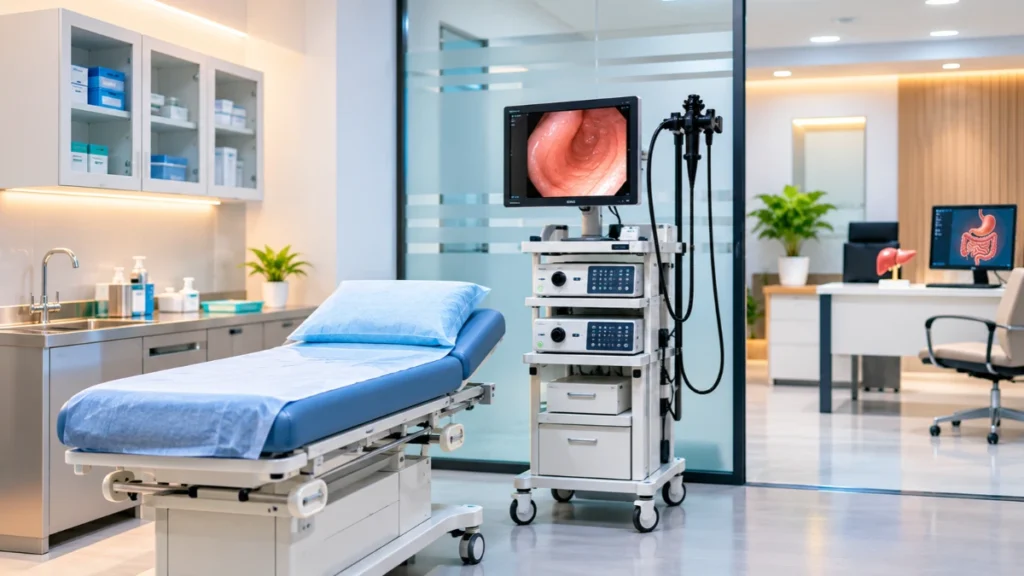
Written procedures help maintain consistent operations. Develop clear workflows for patient registration, medical records, consultations, prescriptions, investigations, and follow-up.
Endoscopy services require additional procedures for patient assessment, informed consent, monitoring, instrument reprocessing, recovery, and discharge.
An independent clinic should also maintain suitable emergency equipment and arrangements for transferring patients who require hospital-level care.
Clinic management software can simplify appointments, billing, electronic records, prescriptions, and follow-up reminders. Patient information should remain confidential, with access restricted to authorised personnel.
Teleconsultations may support selected follow-up cases, provided doctors follow India’s Telemedicine Practice Guidelines and determine when physical examination is necessary. [5]
8. Build Referral Networks and an Ethical Online Presence
Professional relationships with general physicians, internal medicine specialists, surgeons, radiologists, laboratories, and hospitals can support appropriate referrals.
A professional website can communicate clinic services, location, consultation timings, and appointment procedures. Educational articles about fatty liver, acidity, IBS, jaundice, and gallstones can also help patients access reliable information.
Public communication should remain factual and professionally appropriate. Doctors should review the National Medical Commission’s applicable ethical advertising and public communication guidelines before planning promotional activities. [6]
9. Manage the First Six Months Effectively
Opening the clinic is only the beginning. The first six months should focus on understanding patient requirements, managing expenses, improving workflows, and maintaining clinical standards.
Review the following indicators every month:
- Consultation volume and appointment cancellations.
- Patient waiting time and follow-up completion.
- Rent, salaries, and operating expenses.
- Equipment maintenance and downtime.
- Referral coordination.
- Staff training and patient-safety incidents.
Avoid purchasing expensive equipment or expanding services before evaluating actual clinical demand and financial capacity.
10. Common Mistakes to Avoid
Several early decisions can create unnecessary financial and operational difficulties.
- Purchasing expensive equipment without assessing demand.
- Using the entire budget on interiors and machinery without maintaining working capital.
- Selecting unsuitable premises.
- Underestimating infection-control responsibilities.
- Failing to establish emergency referral arrangements.
- Hiring staff without appropriate training.
- Depending entirely on online promotion rather than reliable clinical services.
A sustainable clinic should prioritise appropriate medical care, patient safety, transparent communication, and responsible financial planning.
Frequently Asked Questions
Can a gastroenterologist open a clinic without an endoscopy machine?
Yes. A consultation-based clinic can provide specialist outpatient services, subject to applicable registration requirements. Patients needing procedures can be referred to suitable facilities.
How much investment is needed?
The illustrative consultation-clinic budget in this guide is ₹7.5 lakh, excluding working capital. Actual expenditure depends on location, premises, staffing, and equipment.
Is registration compulsory for a single-doctor clinic in Bihar?
Bihar has adopted the Clinical Establishments Act, 2010. Doctors should confirm their specific registration category and applicable 2026 state provisions with the registering authority.
How can a new gastroenterology clinic develop its patient base?
Focus on appropriate medical care, accessible appointments, professional referral relationships, clear communication, and reliable follow-up.
Should doctors purchase endoscopy equipment immediately?
Not necessarily. Equipment purchases should be based on clinical demand, utilisation, maintenance costs, available staff, and financial capacity.
Conclusion
Starting a gastroenterology clinic in India in 2026 requires careful planning of investment, premises, registration, equipment, staffing, and patient safety. Doctors should first decide whether a consultation-based practice meets their requirements or whether they have the resources to establish an endoscopy facility.
A realistic financial plan, verified regulatory information, appropriate referral arrangements, and trained staff can help establish a sustainable practice. Long-term success depends on providing appropriate medical evaluation, safe procedures, transparent communication, and continuity of care.
References
- Employees’ State Insurance Corporation. Standard Specifications of Endoscopy Unit/HD Video Endoscopy System, 26 December 2025. Official document.
- National Centre for Disease Control. National Guidelines for Infection Prevention and Control in Healthcare Facilities. Official guidelines.
- Government of Bihar, Health Department. Acts and Rules and 2026 Healthcare Establishment Notifications. Official records.
- Bihar State Pollution Control Board. Biomedical Waste Management Guidance. Official guidance.
- Ministry of Health and Family Welfare. Telemedicine Practice Guidelines. Official resource.
- National Medical Commission. Official Notices and Guidelines. NMC website.