66 Powerful Lessons We Can Learn from Sam Altman (CEO of OpenAI, ChatGPT)
What can Sam Altman’s visionary, future-focused approach teach today’s founders, operators, and creators? From embracing resourcefulness to scaling with intention, 66 industry leaders share hard-won insights inspired by Altman’s philosophy—lessons that can elevate how you build, innovate, and grow.
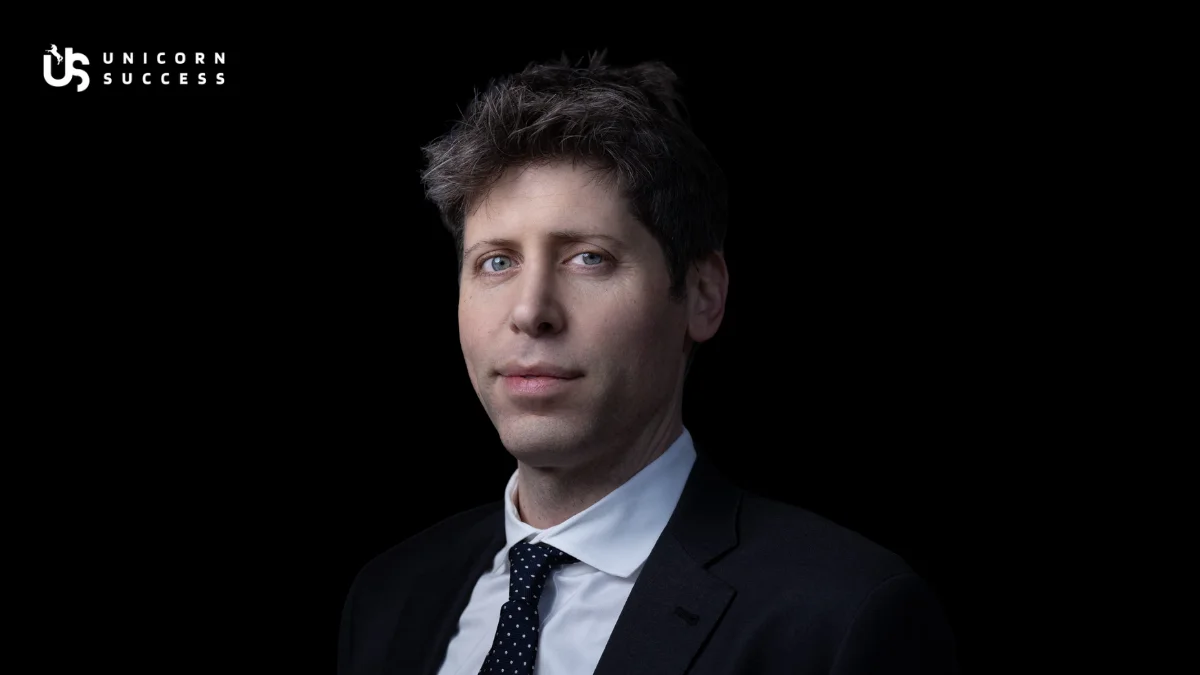
Sam Altman, the visionary entrepreneur and CEO behind OpenAI, has reshaped the global conversation around technology, innovation, and the future of humanity. From leading Y Combinator to steering the development of world-changing AI models, Altman’s career is a masterclass in long-term thinking, calculated risk-taking, and building systems that scale far beyond their original scope.
His bias toward action, willingness to embrace uncertainty, and relentless pursuit of progress have influenced founders across industries. Whether accelerating AI research, investing in moonshot ideas, or championing a future shaped by bold experimentation, Altman has become one of the most influential voices in modern tech leadership.
To understand the leadership and innovation lessons behind his rise, we asked 66 experts from diverse fields:
What is the one powerful lesson you learned from Sam Altman, and how has it shaped your approach to business, leadership, or product building?
Their insights reveal actionable takeaways on resourcefulness, speed of execution, scaling with purpose, embracing curiosity, and making bold decisions when others hesitate. These lessons offer a roadmap for anyone building in uncertain times—whether you’re running a startup, scaling a team, or navigating a rapidly evolving market.
66 Lessons from Sam Altman to Elevate Your Business, Leadership, and Product-Building Approach:
1. Build for the Future Version, Not the Present
Hello, one of the most powerful lessons I’ve learned from Sam Altman is the importance of building for the future version of your product, not just the version you can deliver today. He talks often about how companies should take advantage of AI’s current capabilities while assuming the technology will get dramatically better over time. That mindset gives you permission to start small, but also forces you to bet on where the world is heading, not where it currently sits.
A good example from my own world is how we approach AI automation projects. A few years ago, teams would only build what the current models could reliably handle. Today, we design the system for what the next generation of models will unlock, even if we need guardrails in the first release. It’s the same pattern Sam highlights. Start with something workable. Ship it. Learn. But architect it so you can expand the depth and reach of the solution as the underlying AI improves.
I’ve seen this pay off many times. One client began with a narrow document-processing workflow. Because we designed it with a “future lift” in mind, they were able to plug in more advanced models as they arrived. What started as a simple automation effort has grown into an intelligent, end-to-end workflow that now covers extraction, classification, summarization, and even decision support.
The lesson is simple: don’t build for the limit of the tool you have today. Build for the world you know is coming. Sam emphasizes that idea a lot, and it has changed how I think about every AI project we take on.
– Matthew Mead, Chief Technology Officer, SPR
2. Bold Vision Paired With Disciplined Execution
One lesson that stands out is the importance of making bold, long-term bets while staying relentlessly focused on execution. It’s not just about having a visionary idea, it’s about systematically building the foundations to make that vision real.
I remember reading an interview where Altman emphasized the tension between speed and safety in AI development, and it resonated deeply because I see the same challenge in startups: balancing rapid growth with sustainable processes. At spectup, we often advise founders on fundraising and operational scaling, and the lesson translates directly, being ambitious is critical, but without careful execution, the ambition alone can fail.
One example that struck me was how OpenAI approached the GPT product iterations. They didn’t just release a perfect model from day one; they launched early versions, learned from real-world usage, and incorporated feedback, all while maintaining guardrails around safety and ethical considerations. This approach mirrors what we encourage founders to do in fundraising and product development, test, iterate, and scale responsibly.
I recall advising a fintech client on their pitch deck and investor outreach strategy, drawing on this lesson: rather than presenting an overly polished vision that hadn’t been tested, we highlighted the milestones already achieved, the learning loops in place, and the measured next steps. This transparent, structured approach built far more investor trust than a hypothetical roadmap ever could.
The broader takeaway for me is that leadership is not just vision, it’s vision married to disciplined, iterative execution, with a constant awareness of risk and responsibility. Altman’s example reinforces that calculated boldness, when combined with operational rigor, allows leaders to push boundaries while maintaining credibility. At spectup, this lesson shapes both how we guide founders and how I approach decision-making for the firm itself, ensuring that ambition never outpaces execution.
– Niclas Schlopsna, Managing Consultant and CEO, spectup
3. Let Data Drive Decisions, Not Distractions
Sam Altman’s focus on data-driven decision-making is a valuable lesson. In today’s world, full of distractions using data to guide decisions helps remove uncertainty. By relying on data, leaders can make informed decisions that yield clear and measurable results. This method enhances decision-making accuracy and ensures better outcomes.
Data also helps streamline processes and makes organizations more efficient. It eliminates the guesswork involved in decision-making and leads to clearer strategies. When leaders base their actions on solid data, it drives consistent growth. With the correct information, teams can focus on what truly matters and achieve optimal results.
– Vaibhav Kakkar, CEO, Digital Web Solutions
4. Balance Strong Vision With Facts and Feedback
One important lesson from Sam Altman, CEO of OpenAI, is the value of combining strong belief in your vision with careful attention to facts and feedback. He shows that having confidence in what you want to achieve is key, but it must be balanced by making smart decisions based on real data and input from others, which keeps goals realistic and avoids blind optimism.
For example, Altman guided OpenAI to develop artificial intelligence with a clear purpose, and he encouraged open communication and teamwork, making sure that ideas could be challenged and improved. This approach helped OpenAI innovate quickly while remaining responsible about risks and ethics.
Altman’s leadership style is clear and focused, and he often speaks directly to speed up decisions and keep the team aligned. His example teaches that great leadership requires firm vision and the willingness to listen and adapt based on facts, which creates a culture where innovation can grow without losing control.
– Richard Dalder, Business Development Manager, Tradervue
5. Radical Honesty Builds Trust and Alignment

Sam taught us that honesty builds credibility faster than polished appearance. He communicates openly about uncertainty and invites transparent dialogue across complex topics. This inspired us to adopt radical clarity with clients during difficult phases. Honest explanation strengthened respect and improved alignment across shared work. That clarity removed fear around necessary strategic adjustments.
We applied this lesson during a campaign facing unforeseen performance issues. Instead of hiding challenges, we shared the truth and offered a revised plan. Trust increased because communication honoured the partnership across every step. Clients stayed invested as results improved through collaborative problem solving. Sam’s example proved honesty becomes a powerful strategic advantage.
– Jason Hennessey, CEO, Hennessey Digital
6. Revisit and Refine—Even When Work Feels “Done”
Sam Altman taught me the value of revisiting ideas even after they seem complete. He views every solution as open to improvement which encouraged me to look after it even if it is finalized. This perspective helped me realize that learning systems should constantly evolve. It reminded me that the pursuit of better solutions is an ongoing process.
During an experiment, I reviewed a section that was already performing well. By examining it with fresh curiosity, we discovered minor adjustments that increased learner engagement. This improvement came from challenging the belief that good work cannot be improved. The experience reinforced the idea that continual refinement leads to lasting progress.
– Christopher Pappas, Founder, eLearning Industry Inc
7. Prioritize Long-Term Compounding Over Quick Wins
One significant lesson from Sam Altman which I have taken to heart is to prioritize long-term compounding over quick wins. He frequently points out that the most considerable growth will come from the decisions that, albeit slow, will eventually be multiplied and phased out in the future.
One of the best examples is how he invested in the early days of YC companies like Airbnb, not because they were by any means extraordinary at the outset but because their fundamentals had long-term potential. Instead of rushing them towards impressive metrics, the focus was on trust, user-friendliness, and scalability.
That patience allowed them to change the whole industry. This attitude has also been influential in my decision-making process; whenever I am lured into the trap of short-term profits, I ask myself, “Will this be significant in five years?” It has allowed me to channel my resources towards gradual and consequently more highly rewarded in the long run systems and ideas.
– Dhari Alabdulhadi, CTO and Founder, Ubuy Peru
8. Bold Experimentation as a Responsibility
One of the most powerful lessons learned from Sam Altman is the idea that bold experimentation is not just a strategy — it’s a responsibility for anyone shaping the future. Altman often talks about pushing past the fear of being wrong and instead focusing on creating something that meaningfully improves how people live and work. That mindset has deeply influenced how decisions are made at Edstellar.
For instance, when exploring AI-driven personalization in corporate training, the easy route would have been to make incremental updates. But inspired by Altman’s philosophy, the team embraced a more ambitious approach: redesigning the learning experience from the ground up using adaptive learning paths, intelligent assessments, and real-time skill insights.
The initial phase felt risky, but the result was a training model that delivered measurable improvements in engagement and completion rates. Altman’s example reinforces that transformative impact rarely comes from playing it safe — it comes from pursuing ideas that feel just a little too big at first, and then committing to making them real.
– Arvind Rongala, CEO, Edstellar
9. Collaboration Sparks Better Results
Sam Altman talked about getting founders to talk to each other, and I saw this work at Lusha. Our influencer marketing team didn’t really take off until we started sharing what was working and what wasn’t. We basically just showed each other what we were doing, and suddenly everyone’s results got better. My advice? Get different teams talking to each other. It sparks new ideas.
– Yarden Morgan, Director of Growth, Lusha
10. Make Decisions Based on Long-Term Compounding Value
The strongest lesson I’ve taken from Sam Altman is to make decisions based on long-term compounding value, not short-term noise. He often talks about how durable companies are built by solving real problems with patience and focus. We applied this by investing early in real-time incentive tracking, even when it slowed our roadmap. That choice later became our biggest driver of trust, renewals, and growth.
– Hillel Zafir, CEO and Co-founder, incentX
Also Read: 30 Lessons from Larry Ellison That Could Change the Way You Lead, Build, and Win
11. Prioritize Long-Term Value Over Short-Term Gains

One powerful lesson I’ve learned from Sam Altman is the importance of prioritizing long-term value over short-term gains. He stresses building products and companies that have a lasting impact, which is a principle I apply as CEO of Kate Backdrops.
For example, instead of cutting corners to boost immediate profits, we focus on crafting high-quality backdrops that photographers and event planners can rely on for years. This commitment builds customer trust and loyalty, creating a strong foundation for sustainable growth—the very ethos Sam Altman champions.
– David Zhang, CEO, Kate Backdrops
12. Founders Must Own the Big Decisions Early
Here’s what I learned from watching Sam Altman: founders can’t let go of the big decisions. When we launched Buy Now, Win Later, I handled our first e-commerce partners myself. This let us tweak the game mechanics in real time and avoid some early mistakes that could have killed the project. That direct involvement, especially at the start, keeps everyone focused on the right goals.
– John Cheng, CEO, PlayAbly.AI
13. Slow, Trust-Building Strategy Beats Trend Chasing
I learned that chasing trends in healthcare marketing is a dead end. We tried those quick-fix ads, but they never lasted. When we stopped and started creating content that actually answered patient questions, and built a system where they could leave real feedback, things changed. People started trusting us, and that was the real growth. The slow, steady approach wins.
– Josiah Lipsmeyer, Founder, Plasthetix Plastic Surgery Marketing
14. Innovation Requires Ongoing Stewardship and Accountability
One powerful lesson learned from Sam Altman is the importance of treating innovation as an ongoing responsibility rather than a one-time breakthrough. Altman often emphasizes that transformative technology must be paired with long-term stewardship, especially when decisions impact millions.
This mindset has influenced leadership at Invensis Technologies, particularly when navigating AI-driven automation for enterprise clients. For instance, while deploying intelligent process automation for a global logistics firm, the focus extended beyond efficiency gains to evaluating how the system would adapt over time, remain transparent, and avoid unintended biases—an approach inspired by Altman’s repeated reminder that “the most important work happens after the launch.”
Research by Deloitte shows that 94% of business leaders believe long-term governance is essential for responsible AI scaling, reinforcing the need for this philosophy. Altman’s blend of bold experimentation and careful accountability serves as a guiding principle for building solutions that are not only powerful today but resilient and responsible in the long run.
– Anupa Rongala, CEO, Invensis Technologies
15. Momentum Compounds Faster Than Intelligence
A lot of people quote Sam Altman for his big, flashy ideas about AI and the future. But the most powerful lesson I learned from him wasn’t some sweeping prediction—it was something almost embarrassingly simple, and yet it hits you like a brick once you actually apply it:
Momentum compounds faster than intelligence.
Sam talks about this in different ways—”growth solves (almost) everything,” “keep going,” “stay in motion”—but there was a moment early in my entrepreneurial career when this clicked for me in a way that completely changed how I operate.
Here’s the story:
Years ago, before Listening.com, I built a product that was basically stuck in purgatory. The team was smart, the idea had promise, but nothing moved. We kept polishing the edges of the product, rewriting specs, doing another round of user interviews—all things that felt productive but didn’t create any actual momentum.
Around that time, I heard Sam say something that sounded weird at first:
“A mediocre plan executed with relentless momentum beats a brilliant plan that never gets out of the garage.”
That line irritated me a bit because it went against all my instincts—my default approach was always: think harder, plan more, make it perfect. But I decided to test his idea in the smallest way possible.
Instead of running another planning session, we pushed a half-baked version live. It had rough edges everywhere. Honestly, I was a little embarrassed by it. But within 72 hours, we had more real user feedback than in the previous six months combined. And because the product was out in the wild, the changes we made suddenly mattered. Every tweak had weight. It created this weird psychological tailwind I’d never felt before.
That experience rewired me.
It’s why, years later at Listening.com, we ship aggressively, we experiment aggressively, and we treat forward motion like it’s oxygen. Not because it’s chaotic, but because it creates information, confidence, and weird little bits of luck that just don’t show up when you’re standing still.
People think Sam’s superpower is brainpower. And sure, he’s brilliant. But the real superpower—the one that normal founders can steal—is how fiercely he protects momentum. He treats stagnation like a cancer.
Most startups don’t fail because they make the wrong move. They fail because they make no move. Momentum, even tiny messy momentum, has a way of compounding into breakthroughs.
– Derek Pankaew, CEO & Founder, Listening.com
16. Sustainable Results Come From Long-Term Thinking
Sam Altman’s long-term thinking really stuck with me. At YEAH! Local, I dropped the quick ranking hacks and we focused on creating solid content over several months. The traffic we got was much steadier than the temporary spikes from chasing trends. It’s a slower process, but it builds something that lasts and our clients get traffic they can actually depend on.
– Justin Herring, Founder and CEO, YEAH! Local
17. Relentlessly Reinforce the Mission to Drive Alignment
Sam Altman is good at making sure everyone knows what they’re actually working toward. At UrbanPro, when we doubled our size, we just kept repeating our goal: connect more students with more tutors. It was simple but it worked. My advice is, whenever you’re making a big move, constantly remind everyone what you’re building. It makes decisions clearer and helps people see how their work matters.
– Rakesh Kalra, Founder and CEO, UrbanPro Tutor Jobs
18. Build Before the Market Understands the Need
Sam Altman said something once about working on ideas before they make sense to anyone else, and that stuck with me. So at Search Party, we built our AI visibility platform way before most brands were thinking about LLM search. The early feedback was a mess. But by iterating fast, we found our users. Don’t wait for the market to catch on. Build the things people don’t know they need yet.
– Ryan Brown, CTO, Search Party
19. Focus on What Compounds—Systems, Trust, and Long-Term Assets
The most powerful lesson I’ve taken from Sam Altman is the idea that you should always focus on what compounds. In the tech world, that usually means network effects, but running Honeycomb Air in San Antonio, it means building durable systems that pay off years down the line, rather than chasing quick cash today. It’s about being patient and recognizing that most valuable efforts grow exponentially over time.
The best example of this in my business is how we handle technician training and customer trust. A lot of smaller HVAC shops cut costs on training or just focus on high-margin, one-time installs. We pour resources into continuous education for our technicians—that’s a slow, steady investment. The compound return is that our guys diagnose issues faster, fix things correctly the first time, and build massive trust with our customers.
That trust isn’t just a nice feeling; it’s a compound asset. It leads to better online reviews, guaranteed repeat maintenance contracts, and word-of-mouth referrals, which are the only kind of growth that truly scales in a service business. The takeaway is simple: identify the few inputs that make everything else easier, like our commitment to excellence, and dedicate your energy there. That’s how you change the trajectory of the entire business.
– Brandon Caputo, Owner, Honeycomb Heating and Cooling
20. Vision Matters, But Courageous Execution Makes It Real
“Sam taught me that vision is only powerful when paired with the courage to execute before the world believes in it.”
One powerful lesson I’ve learned from Sam Altman is the importance of thinking in horizons, not quarters. Sam operates with a clarity that balances long-term vision with decisive short-term execution. One moment that shaped me was observing how he navigated the rapid scaling of OpenAI he never chased growth for the sake of growth; he chased impact, and the growth followed.
It taught me that real leadership means building systems today that can withstand the pressure of tomorrow. It pushed me to invest more seriously in talent, infrastructure, and mission alignment, even when those decisions didn’t show immediate returns. And the most important part: staying calm under chaos while still moving fast. That mindset fundamentally changed how I approach bold decisions and high-stakes moments in my organization.
– Justin Smith, CEO, Contractor+
21. Bet on Trajectory, Not Current Ability
The most profound lesson I learned from observing Sam Altman is about how we judge potential. In most technical hiring and system design, we obsess over the current state. We want to know exactly what a candidate knows today or what a model can achieve right this second. We prioritize the starting point because it feels safe and measurable.
Altman takes a different view. He focuses almost entirely on the slope of the curve. He bets on the rate of improvement rather than the current position. This sounds simple, but practicing it requires an uncomfortable amount of patience and conviction.
In the context of data science, this approach explains why OpenAI succeeded where better-funded labs stalled. While others tried to perfect distinct algorithms for specific tasks to get immediate wins, Altman and his team bet on the raw scaling of compute and data. They accepted early results that looked clumsy because the underlying rate of learning was constant and exponential. Applying this to leadership changed how I build teams. It forced me to stop looking for people who had already done the job and start looking for people who evolved faster than the problems they faced.
I applied this recently when interviewing a young researcher who lacked standard credentials. Her coding was messy and she had never managed a large-scale cluster. A decade ago, I would have rejected her for lacking polish. But during our whiteboard session, she adapted to new information faster than anyone I had seen in years.
Her trajectory was steep. I hired her based on that slope. Two years later, she is the strongest architect in the division. It taught me that you rarely regret betting on high-velocity learners, even if they start a little behind the pack.
– Mohammad Haqqani, Founder, Seekario AI Job Search
22. Your Network Is a Lifeline in Crisis and Growth
Sam Altman was right, your network is everything. When COVID hit, I called other restaurant owners. We pooled our money to buy ingredients together and sent customers to each other. We all made it through because of that. Keeping in touch with other owners has led to menu ideas and partnerships I never would have come up with on my own.
– Allen Kou, Owner and Operator, Zinfandel Grille
24. Strong Teams Outperform Strong Individuals Over Time
Sam taught me that strong teams outperform strong individuals in long journeys. He invests deeply in people because capability compounds when collaboration feels natural. That shifted how I recruit and support talent across our organisation. I began prioritising curiosity and courage over traditional experience markers.
We saw this during a complex expansion that required diverse skill sets. Teams solved issues faster because trust removed friction across responsibilities. The result strengthened our supply chain during extremely volatile market conditions. His perspective proved people become the most reliable source of resilience.
– Ivan Rodimushkin, Founder, CEO, XS Supply
24. Build Moats Through Strategic Network Effects
Sam Altman talks about creating moats through network effects. At Threadgold, we tried this by co-developing AI tools for NetSuite, and honestly, it’s working. Our market position got stronger because now clients need something that’s hard to copy elsewhere. I’m not saying it’s the only approach, but for SaaS consultants, partnerships like these can make your services stickier when competitors try to match what you do.
– Karl Threadgold, Managing Director, Threadgold Consulting
25. Speed Unlocks Insight and Accelerates Smarter Scaling

Sam taught us that speed matters when exploring transformative opportunities. He shows leaders that hesitation slows discovery across essential experiments. This encouraged us to test ideas faster across SEO and automation. Speed helped us uncover valuable insights hidden behind early trial phases. Quick learning improved accuracy when scaling decisions across offerings.
We applied this mindset when experimenting with behavioural lead scoring. Instead of waiting for perfect certainty, we launched a controlled trial immediately. Patterns surfaced quickly and revealed high value segments across our pipeline. This clarity helped refine messaging and shorten several buying cycles. Sam’s lesson showed that speed supported smarter long term execution.
– Marc Bishop, Director, Wytlabs
Also Read: 40 Powerful Lessons We Can Learn from Rishi Sunak (former UK Prime Minister)
26. Curiosity Fuels Continuous Growth and Innovation
From Sam Altman, I have learned the importance of staying curious. Continuously seeking new knowledge opens the door to fresh ideas. Curiosity fuels creativity and helps us explore new possibilities. It encourages us to adapt and evolve, driving personal and professional growth.
Being open to new ideas can lead to breakthroughs in any field. The willingness to ask questions and challenge assumptions fosters innovation. Curiosity motivates us to push beyond our comfort zones. This mindset keeps us learning and growing, no matter what stage we are at in life.
– Sahil Kakkar, CEO / Founder, RankWatch
27. Innovate Boldly, But With Long-Term Responsibility
One powerful lesson learned from Sam Altman is the importance of balancing bold innovation with long-term responsibility. He often talks about pushing the boundaries of what’s possible while still being deeply intentional about the impact of those decisions. That mindset has shaped how emerging technologies are viewed in professional training.
For example, when Altman emphasizes that AI should be deployed thoughtfully—with governance, oversight, and clear guardrails—it highlights that true innovation isn’t just about speed, but about sustainability and trust. This perspective influenced a recent decision to redesign a few technology training programs to integrate not just AI tools, but also ethical considerations, risk awareness, and responsible-use frameworks. It reinforced the idea that growth becomes meaningful only when the people using the technology understand both its potential and its consequences.
– Arvind Rongala, CEO, Invensis Learning
28. Scale Through Systems, Not Headcount
Sam Altman’s thinking on expansion changed how I approached Franchise KI. Instead of hiring more people, we had our software handle the grunt work. This let us open new locations without costs getting out of control or needing another funding round. What I learned is that steady growth comes from good processes, not more people. You can scale without multiplying your problems.
– Bennett Maxwell, CEO, Franchise KI
29. High-Quality Moves Create Outsized, Compounding Impact
One powerful lesson I’ve learned from Sam Altman is the importance of leveraging small, high-quality moves to create outsized impact. In SEO and digital PR, this translates directly to the way we approach link building. For example, while helping a luxury home fashion ecommerce client, we focused on a handful of highly authoritative guest posts rather than dozens of low-value placements.
The result? A 76 percent increase in organic traffic in just four months. This mirrors Altman’s principle: strategic, thoughtful actions often outperform sheer volume, whether in AI or in digital marketing.
The bigger takeaway is that success isn’t about chasing every opportunity but about carefully choosing the battles that compound value over time. By applying this mindset, we’ve been able to scale campaigns efficiently while building long-term authority and trust for our clients. It’s a lesson every founder, marketer, or innovator can adapt, prioritize quality, anticipate impact, and never confuse activity for progress.
– Alejandro Meyerhans, CEO, Get Me Links
30. Start With First Principles Before Chasing Scale
Sam emphasises the power of asking foundational questions before chasing scale. He often seeks the simplest truth behind complex technology driven problems. That mindset taught me to examine root issues before investing significant resources. It changed how I evaluate opportunities requiring deep structural commitments.
We applied this when reviewing automation systems for warehouse operations. Instead of adding complexity, we simplified flows that improved accuracy. The result saved money while increasing service speed during seasonal peaks. Sam’s framework demonstrated how simplicity strengthens performance across demanding environments.
– Ender Korkmaz, CEO, Heat&Cool
31. Discomfort Creates Space for Growth and Preservation
A lesson I learned from Sam Altman is to welcome discomfort as part of growth. He often speaks about entering unfamiliar spaces and that idea encouraged me to explore new ways of working. It helped me understand that evolution does not need to erase heritage because both can move together. This realization allowed me to see my work with a calmer mind and trust that change can support the roots that shaped it.
I began to notice that discomfort creates room for me to think and give inputs. It helped me develop products that bring the old and the new into the same space with a sense of respect. Customers appreciated it and his example showed me that uncertainty can guide learning instead of slowing it. It inspired me to grow while keeping the spirit of the land close to every choice I made.
– Lord Robert Newborough, Founder/Owner, Rhug Wild Beauty
32. Curiosity Across Industries Builds Trust and Innovation
One lesson I’ve picked up from Sam Altman is to always stay curious and seek out ideas from completely different industries-even if they seem unrelated to real estate. For instance, after learning how OpenAI prioritized community conversation around ethical tech, I started hosting neighborhood Q&As about the selling process, which helped build deeper trust and even led to more word-of-mouth referrals. Sam’s approach reminds me that being open to fresh perspectives–no matter where they come from–can set you apart in business and in life.
– Parker McInnis, Owner, Speedy Sale Home Buyers
33. Focus on the Few Decisions That Truly Change the Company

One lesson I’ve really learned from Sam Altman is the power of focusing on what truly makes a difference. He’s always talked about how it’s easy to get caught up in a long list of tasks, but only a handful of decisions or actions actually determine the direction of a company.
I saw this in action at OpenAI. At the start of the company, there were many directions they could explore; such as different AI models, partnerships, features; but Sam and the team concentrated on the projects with the greatest potential, like developing GPT. By narrowing their focus, they created something that changed the AI field.
For me, that lesson resonates every day running startups. I focus on the few initiatives that truly advance the company; whether that’s optimizing systems, improving the product, or assembling the right team. It’s about being intentional and relentless on what actually counts.
– Alex Smereczniak, Co-Founder & CEO, Franzy
34. Use Uncertainty as Data and Move While Others Pause
The value of treating uncertainty as a feature rather than a threat. That mindset has shaped how I operate in markets where technology, sustainability, and recycling models shift faster than most leadership teams can react. Sam has a unique way of moving forward, even when the ground is still forming under his feet. He treats ambiguity like usable data. That stuck with me early on.
I remember leading a complex partnership negotiation during a period when eco-focused technologies were evolving quickly, and the business case seemed to change weekly. My instinct was to slow down, lock the variables, and wait for clarity. Instead, I leaned into what I had observed from Sam. I acknowledged the unknowns, adjusted the model in real time, and kept the momentum without pretending we had perfect information. The result was a deal that positioned us ahead of competitors who were still waiting for the market to “settle.”
That experience taught me that progress in tech and sustainability rarely comes from having all the answers. It comes from having the conviction to move while others pause.
– Neil Fried, Senior Vice President, EcoATMB2B
35. Scale Structurally for a Future 10× Bigger Than Today
The most powerful lesson I’ve learned from Sam Altman is the principle of Aggressive, Non-Linear Structural Scaling. The conflict is the trade-off: traditional business growth relies on slow, methodical, verifiable steps, which creates a massive structural failure because it leaves the business vulnerable to rapid technological disruption. You must pursue growth that is designed to change the entire market structure.
This lesson directly challenges the comfort of my field. We typically prefer slow, predictable growth. Altman’s philosophy, however, forces the idea that you must immediately invest heavy duty resources into building an operational structure that is exponentially larger than your current need. The example I use is his approach to data centers: he doesn’t build for next quarter’s demand; he builds for a demand that is ten times greater, even if it creates massive immediate overhead.
I apply this by not just buying a specialized lift truck for this year’s projects, but by building a logistics system capable of handling triple the material volume—investing now in scalable, hands-on structural capacity. This sacrifices short-term profit for the guaranteed structural integrity needed to absorb massive, non-linear market changes (like a major storm cleanup or rapid geographic expansion). The best lesson is to be a person who is committed to a simple, hands-on solution that prioritizes building verifiable, exponential structural capacity well ahead of any foreseeable need.
– Ahmad Faiz, Owner, Achilles Roofing and Exteriors
36. Micro-Experiments Compound Into Major Growth
One key takeaway from Sam Altman that transformed my approach is embracing rapid experimentation to uncover compounding efficiencies. For instance, when scaling our SMS campaigns at We Buy Any Vegas House, I stopped waiting for ‘perfect’ data and instead ran weekly micro-tests-like tweaking call-to-action timing by 15 minutes.
One such test revealed 7pm texts outperformed 6pm by 11%, which alone added six extra deals monthly. That mindset shift–where small, frequent optimizations build exponential growth–mirrors how Sam approaches innovation.
– Casey Ryan, Founder, We Buy Any Vegas House
37. Bet on People First—Everything Strong Follows
One lesson from Sam Altman that’s stuck with me is the importance of betting on people before processes. When I’m evaluating properties or partnerships in the Augusta area, I’ve learned that the character of who you’re working with–whether it’s a contractor, a seller, or an Airbnb guest–matters more than any spreadsheet.
For instance, I once took a chance on a local renovation crew that had more heart than portfolio, and they’ve since become my go-to team, delivering craftsmanship that consistently wows guests at our properties near Augusta National. That trust-first mentality has built a network I can rely on when deals get complicated.
– Gene Martin, Founder, Martin Legacy Holdings
38. Optimism as a Moral Responsibility in Leadership
A powerful lesson I’ve absorbed from Sam Altman is his belief that optimism is a moral responsibility, a value that bridges my past in ministry with my current work in real estate. When homeowners come to us feeling overwhelmed, I see it as my duty not just to make an offer, but to present a path forward.
For example, instead of seeing a home’s failing foundation as just a negotiating point, I lean on my construction background to map out a clear, cost-effective repair plan that preserves the seller’s equity, turning a situation of stress into one of tangible hope.
– Jeremy Schooler, Founder, Kitsap Home Pro
39. Build Systems That Last Instead of Chasing Short Gains
Sam Altman said something about thinking ahead that really stuck with me. When I expanded our language programs, I skipped the quick marketing gimmicks and invested in teacher training and adaptive tech instead. The result? Consistent enrollment growth for years. Building systems that last, even if it’s slower, creates a much stronger foundation for growth than any short-term win.
– Yoan Amselem, Managing Director, German Cultural Association of Hong Kong
40. Attack the Highest-Leverage Problem With Relentless Focus
The most powerful lesson I’ve taken from watching Sam Altman’s journey isn’t about the technology itself; it’s about the strategic value of relentless focus on the highest leverage problem. He constantly reinforces the idea that you shouldn’t waste time on incremental improvements; you should only work on projects that could genuinely lead to a ten-times leap.
The practical example is his push for Compute and Tooling Abundance. While everyone else was focused on incrementally improving software features, he focused his entire organization on acquiring and democratizing the fundamental, scarce resource—massive compute power—making it cheap and accessible. He didn’t focus on building a faster car; he focused on building the cheapest, most efficient engine possible for everyone.
This lesson directly impacts Co-Wear because it forces me to apply the same filter: I stopped focusing on marginal gains in marketing optimization and started focusing on the core, ten-times problem of our supply chain and logistics. It proves that the true value of leadership lies in identifying the highest-leverage bottleneck and attacking it with massive, singular resource dedication.
– Flavia Estrada, Business Owner, Co-Wear LLC
41. Curiosity + Conviction: The Competitive Edge in Real Estate
One lesson I’ve taken from watching Sam Altman’s approach is the value of staying relentlessly curious while making bold, informed decisions. Real estate rewards discipline, but it also rewards people who keep learning faster than the market shifts. Early in my career, I focused heavily on traditional indicators like comps and absorption rates. That worked, but it kept me in a narrow lane. Seeing how Sam balances innovation with calculated risk made me rethink that.
A few years ago, I applied that mindset to evaluating a small multifamily property in a part of San Diego that wasn’t getting much attention yet. On paper, it looked average. After digging deeper into zoning changes, local business growth and demographic trends, I realized the neighborhood was on the edge of a real transformation. Instead of walking away, I leaned into the data, trusted the signals and moved quickly. That property has outperformed every projection since.
Curiosity paired with conviction has become one of my guiding principles. In real estate, houses and buildings tell a story, but the real opportunities appear when you keep asking questions long after others stop. That habit has shaped how I invest and how I lead Palm Tree Properties today.
– Erik Egelko, President, Palm Tree Properties
42. Transparent Leadership Builds Trust—Especially in Hard Moments
One powerful lesson I’ve learned from Sam Altman is that transparency earns trust, especially when things are uncertain. My background as a teacher taught me the same thing–kids (and clients) know when you’re being real with them.
When I started Stillwater Properties, I’d explain every step, even the messy parts, to sellers facing hard times. That honesty has made people feel heard and respected, which leads to real solutions and strong, lasting relationships–just like Altman practices in the tech world.
– Mac Sullivan, Founder & President, Stillwater Properties
43. Fail Forward Fast: Adaptation Beats Perfection in Real Estate
One powerful lesson I’ve learned from Sam Altman is the importance of ‘failing forward’ in business. In real estate, I’ve applied this by tracking which marketing strategies weren’t working in different Cleveland neighborhoods and immediately pivoting rather than persisting with poor results.
For example, when traditional door hangers failed in Lakewood, instead of giving up on the area, I quickly switched to hosting local buyer workshops, which ended up connecting us with several motivated sellers who appreciated our educational approach. This willingness to recognize failure quickly and adapt–rather than seeing it as a setback–has been crucial to building Realty Done in a competitive market.
– Damien Baden, Realtor, Realty Done
44. Start With What You Have and Scale Through Iteration
One powerful lesson I’ve learned from Sam Altman is the value of starting with what you have and scaling through iteration. When I first shifted from flipping shoes and cars to real estate, I didn’t wait for perfect resources-I bought one distressed house using my construction knowledge, renovated it myself, and reinvested the profits into the next. That hands-on cycle of action-feedback-improvement is how we grew from single-family flips to a full-service team handling complex deals across the Hudson Valley.
– Nicolas Martucci, Owner, Hudson Valley Cash Buyers
45. Speed of Execution Outperforms Perfect Planning
I’ve learned from Sam Altman that speed of execution beats perfect planning every single time. When I started Highest Offer, I could have spent months building the perfect system, but instead I launched with a basic framework and adjusted as real deals came in. That approach helped me close my first 50 flips in record time because I was learning from actual market feedback, not theoretical scenarios–and in real estate, the market waits for no one.
– Erik Daley, Founder & Co-Owner, Highest Offer
Also Read: 50 Lessons from Warren Buffett That Could Change How You Think
46. Big Vision Requires Disciplined, Data-Driven Execution
One lesson I’ve learned from Sam Altman is that bold ideas need disciplined execution. In real estate, that means dreaming big–like expanding into new counties or launching new seller programs–but grounding those moves in tight systems and clear numbers. For example, when we started offering instant cash offers across coastal NC, I paired that big swing with daily check-ins on response time and conversion data. The balance of vision and discipline has kept our growth both exciting and sustainable.
– Ryan Hall, Founder & President, Coastal NC Cash Offer
47. Constraints Fuel Creativity and Market Advantage
The most powerful lesson I’ve learned from Sam Altman is that constraints often breed creativity. In real estate investing, I’ve embraced this by turning Baltimore’s challenging market conditions into opportunities.
For instance, when faced with a particularly distressed property that other investors avoided due to strict code violations, instead of walking away, we developed an innovative renovation approach that not only met code but created a unique selling feature.
This mindset shift–viewing limitations as catalysts for innovation rather than roadblocks–has helped PHIG solve complex property situations that others couldn’t, much like how Altman turned AI’s inherent limitations into springboards for breakthrough technologies.
– Joe Hartman, Managing Member, Perry Hall Investment Group
48. Push Boundaries Even When You’re Winning
A powerful lesson I’ve learned from Sam Altman is the importance of consistently pushing boundaries, even when it feels like you’re already doing well. For us at Dynamic Home Buyers, that means not just buying houses, but continually asking, “How can we make this process even smoother or more beneficial for a homeowner in distress?”
For example, we recently streamlined our offer-to-close timeline by 25% by proactively addressing common snags, ensuring sellers can move on with peace of mind faster than ever, much like how OpenAI doesn’t just rest on its latest model but relentlessly seeks the next breakthrough.
– Matthew McCourry, CEO, Dynamic Home Buyers
49. Systems Over Superstars: Build Processes That Scale
Sam Altman is right. Relying on star performers is a trap. When we moved Prezlab to a SaaS model, I made sure we documented everything and automated the workflows. This way, if someone was out, the whole operation didn’t fall apart. Focusing on the process instead of the person is exactly how we’ve been able to grow without everything breaking.
– Ibrahim Alnabelsi, VP – New Ventures, Prezlab
50. Great Products Need Great Distribution to Win
Sam Altman taught me to focus equally on product distribution as I do on product development. People tend to admire product features, but Sam understands that the delivery method determines ultimate success.
Our team partnered with a client who developed an exceptional AI platform for contract analysis that exceeded current market standards. Yet, the tool received no response from users.
After implementing proper onboarding procedures and integrating the platform with Slack for lawyers, we saw a 900% increase in tool usage within the following two weeks. The myth that “build it and they will come” exists only in dreams. That approach no longer works for me–or according to Altman.
– Vincent Carrié, CEO, Purple Media
51. Resourcefulness Beats Resources Every Time
One transformative lesson I’ve learned from Sam Altman is the power of resourcefulness over resources–making progress with what you have rather than waiting for perfect conditions. When I started Integrity House Buyers after my military service, I didn’t have venture capital or a team, but I applied this mindset by using my Army training to systematically tackle one house at a time.
I’d walk distressed properties myself, leverage my construction knowledge from deployments, and reinvest every dollar back into the next deal. That scrappy, mission-focused approach-treating each challenge as something to overcome rather than avoid-has been the foundation of building a sustainable business that serves Tennessee homeowners without the overhead of traditional real estate operations.
– Anthony Warren, Founder, Integrity House Buyers
52. Founder–Market Fit: Care About the Problem Deeply
Sam Altman talks about founder-market fit, and I get it. At Xponent21, I went all in on AI SEO because the standard approaches just weren’t working. Focusing on the specific communication problems I saw made our tools actually effective. When you care about a problem, that has to be your guide. It’s the only way to build something that lasts.
– Will Melton, CEO, Xponent21
53. Scale Systems Without Losing the Human Mission
One lesson I’ve learned from Sam Altman is the importance of building systems that can scale without losing the human touch. When I transitioned from being a financial advisor to full-time real estate investing, I realized that growth means nothing if you lose sight of why you started.
For example, even as Cape Fear Cash Offer has expanded across three counties, I still personally review every seller’s situation because I know that behind each property is a family going through a difficult time.
Altman’s approach of scaling technology while maintaining OpenAI’s mission reminds me that sustainable growth comes from staying true to your core purpose–in our case, genuinely helping families navigate challenging circumstances rather than just buying houses.
– Jason Velie, Owner, Cape Fear Cash Offer
54. Build for Change, Not Just Efficiency
Sam Altman has a point about building for change, not just efficiency. In dental IT, threats appear overnight. We switched to cloud-based security, so when a new vulnerability pops up, we can update protections for all our clients at once. Building systems that can shift quickly is what actually keeps practices safe when regulations or threats change.
– Tom Terronez, CEO, Medix Dental IT
55. Curiosity + Experimentation = Breakthroughs
I took Sam Altman’s advice about staying curious. At GRIN, I told my team to just go for it with new AI tools and not worry about failing. We found a better way for creators to connect with fans, and our engagement numbers spiked within a week. If you want to keep up with tech, you have to let your team mess up and experiment with weird ideas.
– Brandon Brown, CEO, Search Party
56. Network Effects Matter More Than New Features
At SuperScaling.com, I’ve seen founders grow by talking to each other, which goes way beyond what hosting like CLDY.com provides. It reminds me of what Sam Altman says about network effects. My advice to other software companies is stop just building features and build ways for your users to connect instead. That’s what makes people stick around and actually learn. It’s the most effective thing we’ve seen.
– Alvin Poh, Chairman, CLDY.com Pte Ltd
57. Build What People Need—Not Just What Sells Fast
When I started Backlinker AI, I kept thinking about something Sam Altman said. He wasn’t focused on immediate revenue, but on building something people actually needed, even if that meant some slow quarters. It’s tempting to chase quick wins, but we stuck with improving our product, even when the results weren’t instant. That approach has led to much steadier growth for us.
– Bennett Heyn, Founder, Backlinker AI
58. Build From Personal Experience, Not Market Trends
I stopped building Lumira based on market trends and started using my own experience with burnout and therapy. I created features I knew would have helped me, and it turns out, they helped a lot of other people too. Our engagement numbers went up. Build from your life, not from a spreadsheet. People can tell the difference.
– Daniel Hebert, Founder, yourLumira by SalesMVP Lab Inc
59. Be Mission-Driven—but Pragmatic and Measured
Sam Altman’s point about being mission-driven but pragmatic really hit home when we were building our AI health platform at Superpower. It was a constant tug-of-war between protecting patients and wanting to do something wild with data. His approach helped us find the middle ground, not getting paralyzed by caution or moving recklessly. My advice is to aim big but test your ideas with small, responsible experiments.
– Max Marchione, Co-Founder, Superpower
60. Think Exponentially and Build for the Future Before It Arrives
Sam Altman taught me to design for scale from the start. His decision making always assumes rapid growth, heavy demand, and a future that arrives faster than expected. That mindset reshaped how I approach growth and storytelling at Nextiva.
Sam thinks in exponential terms and builds the foundation before the market fully forms. I applied that lesson when we reintroduced our Unified-CXM platform. Instead of presenting it as a tool that replaces isolated communication systems, we positioned it as a complete environment for managing every customer interaction. That required us to prepare our marketing engine, narrative, and demand strategy as if adoption would surge, not trickle in.
One example is how we built our revenue programs around AI-assisted communication. Many teams still treated AI as an experiment. Sam’s influence pushed me to treat it as a coming standard. We built campaigns around measurable outcomes, highlighted consolidation as a strategic move, and tied our message to operational impact at scale. When the market accelerated, we were already operating at that level.
Sam’s lesson is to think ahead, prepare early, and act with the speed you expect the future to demand. It leads to stronger strategy, clearer execution, and the ability to shape a category.
– Yaniv Masjedi, Chief Marketing Officer, Nextiva
61. Slow Down, Focus Deeply, and Make Work That Lasts
Sam Altman’s point about taking it slow has really changed how I work at Awesomely. I used to push out new things to get ahead, but they never lasted more than a few months. Now we just focus on one idea and see it through. It’s harder, but it works. People now tell us what they need for next year’s plans, which is completely different from before. Patience is the key, even when it feels wrong.
– JP Moses, President & Director of Content Awesomely, Awesomely
62. Move Fast When Confidence Is High—Even If Certainty Isn’t
The powerful lesson I learned from Sam Altman is to strike while you are confident, sometimes even if you are not entirely sure where you are going. Altman talks often about how most people underestimate the cost of moving slowly.
This has dramatically shifted how I myself conduct work. For example, recognizing that demand for our pest control company was on the rise, I chose to stop analyzing and start hiring ahead of the curve.
It was scary to start hiring when our company wasn’t full steam ahead, but it allowed us to handle more customers without sacrificing our standards. This one decision has propelled our company forward far more than had I waited for “the perfect storm to hit.”
– Matthew Johnston, Owner, Bug Shockers
Also Read: 12 Business Lessons from Vince McMahon’s WWE Career
63. Track the Metrics That Truly Matter
I picked up a useful trick from Sam Altman: track the numbers that matter. At the Spanish Cultural Association, I saw event attendance dropping, so we completely reworked the calendar. Engagement jumped the next quarter. My advice is to figure out which metrics actually show you’re hitting your goals, not just the ones that are easy to count.
– Selene Luk, Customer Care manager, Spanish Cultural Association of Hong Kong
64. Ship Fast, Learn From Users, Adapt Quickly
Here’s something Sam Altman understands: with AI, you just have to ship it and see what happens. Releasing ChatGPT to everyone was a gamble, but the constant user feedback fixed problems faster than any internal team could. It’s why I tell clients to stop planning and just start small. Measure what works, listen to what people say, and change course quickly. That’s how you actually learn what sticks.
– Vlad Ivanov, CEO, WordsAtScale
65. Dream Big, Execute Relentlessly—Vision + Action Wins
One of the things that can be learned from Sam Altman is to take risks with big ideas and be brutally realistic at the same time. He’s often quoted as thinking about things that happen over decades, not quarterly, but what’s more interesting is that he has this huge vision and at the same time, he’s so detail-obsessed about making it happen.
One such area is in his approach to creating infrastructure at OpenAI. He could have taken what others may consider to be ample time to figure out what his infrastructure was, but instead, he decided to address what others may think was an overinvestment in things like compute.
The leadership would have waited and looked at what others were doing, and so on. His willingness here to be proactive in addressing what was perceived to be an overinvestment is one of the reasons OpenAI was able to train its models at such scale.
The lesson is clear: dream big, but lavor endlessly. Having vision without action is daydreaming, and having action without vision is waste of time. The intersection of vision and action is what drives breakthroughs.
– Fred McGill Jr, Owner, Bray Electrical
66. Leverage Multiplies Conviction and Accelerates Impact
One of the most valuable takeaways that I’ve received from Sam Altman is that the power of leverage multiplies one’s conviction. His approach of how smaller teams with higher leverage in the form of technology or capital or even bravery can trump giants has significantly altered my approach of how I personally build and how I personally lead. This approach of mine completely focuses on aligning every single resource behind the idea.
At Ezra Made, this mindset challenged me to automate early and delegate effectively. Instead of scaling staff, we scaled systems. This meant we created internal quoting solutions that took care of repetitive tasks so that our small team could heckle well above its potential. This meant we got efficiency and freedom to take on more audacious projects with the same manpower.
A great takeaway that showed up in Altman’s method of thinking is that it’s the power of leverage that translates ideas into force. Vision and technology combined with persistence may compete effectively but compound at an even more rare rate than capital. What the world truly needs more of in business is the compounding of focus.
Conclusion
Sam Altman’s journey shows that world-class execution isn’t about complexity — it’s about focus, speed, and an obsession with building what truly matters. These lessons are a reminder that great founders aren’t defined by resources, but by clarity of thought and the courage to act.
Apply them consistently, and you won’t just build better products — you’ll build a sharper mind, a stronger team, and a company designed to win.
Now it’s your turn…
Which of Sam Altman’s lessons hit you the hardest?
What’s one shift you’re ready to make in how you build, lead, or execute?
Share your thoughts below—we’d love to hear your perspective! 👇
If this article sparked something for you, pass it along to another founder or builder who’s aiming higher.