18 Powerful Lessons from Liang Wenfeng, Founder of DeepSeek
What makes Liang Wenfeng one of the most disciplined and original founders in modern AI? In this feature, 18 leaders break down the most powerful lessons they’ve learned from Liang Wenfeng—spanning efficiency, originality, adaptability, execution without hype, constraint-driven innovation, and long-term thinking.
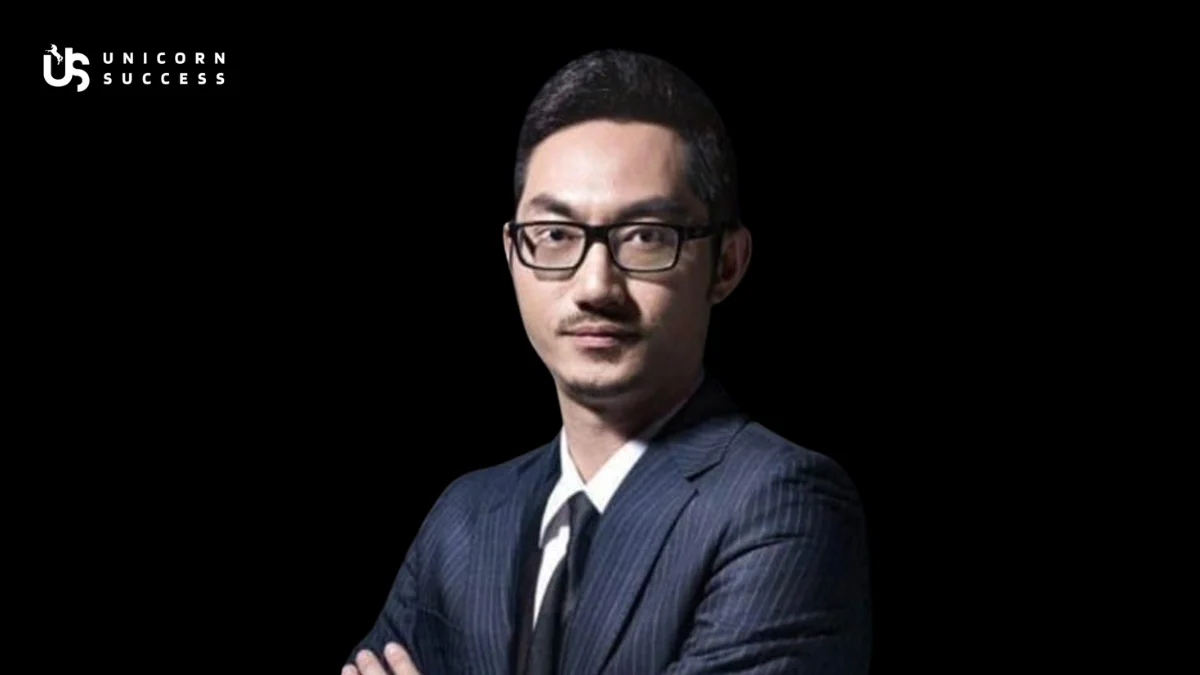
Liang Wenfeng is more than the founder of an AI company. He represents one of the clearest modern examples of disciplined innovation, long-term thinking, and leadership under constraint in the technology world.
While much of the AI industry has been shaped by rapid scaling, massive funding rounds, and constant public attention, Liang built DeepSeek by focusing on efficiency, adaptability, and depth of research. Operating with limited resources and evolving technical challenges, he navigated uncertainty, skepticism, and complexity without relying on hype or imitation. His work demonstrates that sustained impact can be achieved through clarity, patience, and strong fundamentals.
Whether prioritizing smart architecture over brute-force compute, designing systems to adapt rather than aiming for perfection, open-sourcing work to accelerate collective progress, or letting execution speak louder than promotion, Liang consistently showed that meaningful innovation is not built in a single breakthrough—it is earned through disciplined decisions made over time.
His approach to building and leading DeepSeek has influenced how founders, engineers, operators, and researchers think about their own work far beyond AI. From working within constraints and ignoring short-term noise to building resilient systems and focusing on real problems, Liang’s mindset translates directly to leadership, product development, and long-term business building.
To uncover the lessons behind his impact, we asked leaders across industries:
What is one powerful lesson you learned from Liang Wenfeng (Founder of DeepSeek), and how has it shaped how you build, adapt, or lead?
Their responses reveal practical insights on originality, efficiency, adaptability, execution, and long-term discipline—lessons that apply whether you’re building technology, leading teams, or navigating complexity in fast-changing environments.
Together, these lessons form a real-world playbook for anyone aiming to create lasting impact—not just short-term wins or attention-driven success.
18 Lessons from Liang Wenfeng to Help You Build Smarter, Faster, and More Resilient Systems:
1. Define Relevance, Lead Without Imitation
The confidence to lead rarely comes from being ahead. Liang Wenfeng showed it comes from choosing not to follow. Most teams build toward benchmarks; DeepSeek built its own. When they open-sourced a model that matched larger players, it wasn’t defiance. It was trust in process, not prediction.
You stop chasing relevance when you realize you can define it. That shift feels small but it changes everything. Once you see it work, you stop asking what others are doing. You start asking what only you can do.
– Sahil Agrawal, Founder, Head of Marketing, Qubit Capital
2. Solve Real Pain, Skip Flashy Features
One powerful lesson i learned from Liang Wenfeng is do not build for showing power, build for solving pain. Many founders get excited about technology first. Big models, smart features, complex systems. But Liang’s way of thinking feels different. He focuses more on what users are actually struggling with and builds only what helps them clearly.
I applied this lesson in my own work. Earlier, i tried to add many features thinking more features means more value. Users got confused and stopped using it properly. Then i stepped back and asked one simple question: what is the one thing users really need help with right now? I removed extra things and fixed only that one problem in the simplest way. Usage improved quickly and feedback became positive.
The lesson is clear for me. Simple solutions to real problems always beat powerful tech that nobody understands.
– Mr Asif Manzoor, Founder, GMA Deals & Steals
3. Design for Adaptability, Not Perfection
Being the Founder and Managing Consultant at spectup, one powerful lesson I’ve learned from Liang Wenfeng is the importance of building for adaptability rather than perfection, especially when creating technology that anticipates shifting market needs. Early in a conversation with Liang, he shared how DeepSeek’s platform had to pivot multiple times as AI search behavior evolved, and his insight was simple yet profound: designing systems to accommodate change from day one saves far more time and resources than trying to make them flawless at launch. I remember working with a startup client whose analytics platform was technically sound but rigid, making onboarding new features slow and costly. Inspired by Liang’s philosophy, we restructured their development roadmap around modular design and iterative deployment.
The impact was immediate. Features that would have taken months to integrate could now be tested and rolled out in weeks, allowing the team to respond rapidly to investor feedback and market trends. I recall one product iteration where we quickly added a data visualization module requested by early users; because the architecture was adaptable, it didn’t disrupt existing workflows, and adoption rates surged within the first two weeks. Liang’s lesson also reinforced a mindset I bring to spectup’s work with startups: it’s not about presenting a perfect, polished story or deck at first, but creating a framework that can evolve and scale as feedback comes in.
Beyond product strategy, this approach shaped how we guide clients in investor readiness. Instead of locking in rigid financial projections or market assumptions, we build flexible models and pitch narratives that can adapt as due diligence uncovers new insights. The practical takeaway is that adaptability breeds resilience; teams that anticipate change and embrace iterative improvement can capture opportunities that others miss. Watching Liang navigate the fast-changing AI space with this principle taught me that in both product development and fundraising strategy, speed, flexibility, and responsiveness often outweigh initial perfection in determining long-term success.
– Niclas Schlopsna, Managing Partner, spectup
4. Open Ecosystems Beat Secret Algorithms
The most potent lesson for me in Liang Wenfeng is that in a fast moving field like AI deepest defensibility is an open ecosystem, not a secret algorithm. While competitors erect feature walls around their models, DeepSeek’s pragmatic open sourcing of the engine drives acceleration beyond what any one company could achieve by enabling the world to build with and improve its foundation.
We learned a similar lesson when scaling AI work in our own practice. Our most powerful AI patterns were locked in a centralized team of specialists, creating a severe bottleneck. Inspired by the ethos of open-source, we released our “internal- open-source” AI workflow automation playbooks, code libraries, evaluations etc. broadly within every development pod in our firm.
The result is explosive scaling and broader quality of AI adopters within dozens of projects. Instead of waiting for the “expert” each team can fork the “internal open-source” and adapt to their specific client need and send improvements back to the core. It is far more decentralized, far faster and far more fertile than a top down growth of proprietary.
– Kuldeep Kundal, Founder & CEO, CISIN
5. Choose Depth over Scale for Breakthroughs
One lesson I took from Liang Wenfeng is that depth beats scale when you’re solving hard problems. A late night reading about how DeepSeek focused narrowly instead of chasing everything stuck with me. It felt odd at first because growth culture usually rewards expansion.
One quiet insight landed. Sometimes progress comes from staying uncomfortable longer. That idea kinda made me think about my own work. Later, while tightening a data pipeline, we resisted adding layers and instead went deeper on one brittle step, which reduced errors by about 25 percent.
It were slower upfront. The payoff lasted. At Advanced Professional Accounting Services, that approach saved rework hours later. Focus created leverage, even when it felt litle counterintuitive.
– Rebecca Brocard Santiago, Owner, Advanced Professional Accounting Services
6. Smart Architecture Beats Big Budgets
Liang Wenfeng proved you don’t need a massive budget to compete with giants if your underlying architecture is smarter. That really hit home for me. In the beauty industry, the default strategy is usually “more is better” – more expensive actives, more aggressive ad spend. We’re up against conglomerates with deeper pockets, so trying to outspend them is a losing battle.
We took a page from that efficiency playbook with our latest moisturizer. Instead of piling on 20 trendy ingredients, we focused entirely on the delivery system – the “architecture” of how the formula penetrates the skin barrier. It’s cheaper to produce, but it works faster because it’s optimized (and not just overloaded). DeepSeek showed that smart engineering beats brute force. For us, that same thinking turned a modest launch into a bestseller.
– Nikki Kay Chase, Owner, Era Organics
7. Prioritize Fundamentals, Ignore Short-Term Hype
One lesson I’ve learned from Liang Wenfeng, who founded DeepSeek, is the importance of having a long-term perspective and prioritising fundamentals instead of short-term hype.
Liang insisted on not only the acquisition of strong technical skills but also the proficiency of the models that employed such skills. While the majority of the companies in the AI industry were busy building bigger and pricier systems, DeepSeek was really focused on performance tuning , and this was done with minimal resources.
A good case in point is the patient approach to efficiency and research that DeepSeek took. The company, with its long-term investment in the right skills and personnel, has turned them into real market players without making use of the marketing hype.
I learned that a strong leader is one who does not give in to the pressure of blindly following the trends. The path of true innovation is not one with speed; it is with direction, depth, and discipline.
– Dhari Alabdulhadi, CTO and Founder, Ubuy Peru
8. Pursue Long-Term, Curiosity-Led Research
One of the most impactful lessons I have learnt from Liang Wenfeng, the founder of DeepSeek, is the value of prioritizing curiosity-driven work and research that focus on the long term, rather than short-term monetary rewards.
When DeepSeek first got started, Liang concentrated on optimizing the structuring of AI models and also improving the datasets, even if it came at a cost, money, time, and other resources.
That dedication to understanding the core technologies, the nature of intelligence, and especially the more complex problems came to yield long-term rewards on a different scale. Liang’s vision of a company that would positively and profoundly impact the world was more than a fleeting success.
– Rafael Sarim Oezdemir, Head of Growth, EZContacts
9. Aim for Transformation, Not Comfort
Liang wrote in a preface that whenever he encountered difficulties at work, he’d think of Jim Simons’ words about modeling prices. That mindset, believing solutions exist even when you can’t see them, that’s what I learned from him. Too many times at Nextiva, we’ve hit obstacles and looked for workarounds. Liang looks for breakthroughs.
He founded DeepSeek because he believed his hedge fund’s mission was to improve the effectiveness of China’s secondary market. That’s a massive goal. Most companies pick achievable targets. We set quarterly objectives that we know we can hit. That’s practical. But Liang aimed for something transformational. He wasn’t trying to build a better hedge fund. He was trying to change how markets work.
When DeepSeek was founded, venture capital firms were reluctant to provide funding because it was unlikely to generate an exit in a short period. So he self-funded through his hedge fund. He didn’t need external validation. At Nextiva, we track investor sentiment and market expectations. We should. But Liang taught me that the most important validation comes from building something that works.
The lesson is think bigger than your current capabilities. We’re scaling our unified communications platform. We’re doing well. But are we thinking big enough? Liang didn’t have the resources to build DeepSeek when he started. He built them. That’s the difference between incremental growth and transformation.
– Yaniv Masjedi, Chief Marketing Officer, Nextiva
Also Read: 34 Powerful Lessons from John Cena
10. Let Execution Speak, Not Hype
A key lesson from Liang Wenfeng is that execution matters far more than public noise. Quiet progress often delivers stronger long term impact because consistent daily action builds trust over time. He avoids distraction and remains grounded even when constant attention pulls elsewhere. I learned that steady patient effort creates clearer lasting results than loud promises or early claims.
Instead of announcing changes early I focused on finishing the real work before speaking publicly. This approach reduced pressure and allowed ideas to mature slowly through testing and refinement. When results appeared the feedback felt honest since outcomes were visible and easy to judge. Execution earned credibility naturally because the work explained its true value without extra attention.
– Christopher Pappas, Founder, eLearning Industry Inc
11. Ship Often, Fix Faster
What I noticed with Liang Wenfeng’s team at DeepSeek is how they handled setbacks with their models. Instead of waiting for perfect, they just pushed updates and asked people what they thought.
We tried that at Search Party with shorter release cycles. It worked. We fixed user issues faster and our data model got better. Just ship early and listen.
– Ryan Brown, CTO, Search Party
12. Use Constraints to Drive Focused Innovation
One of the most important takeaways that I have gotten from Liang Wenfeng is that it is often far better to focus rather than to expand when creating “breakthrough” technology. With the creation of “DeepSeek,” Liang has illustrated that you don’t necessarily have to have the biggest budget or the biggest team in order to compete in the field of AI.
DeepSeek’s model of training highly efficient models with reduced resources was counterintuitive to those who believe that the only way to advance was to spend more. The takeaway for leaders here is that innovation occurs through defined constraints, not in spite of them. When constraints become design inputs, innovation occurs and, in the end, so does competitiveness. Efficiency, when designed, becomes an asset, not an expense.
– Matthew Johnston, Owner, Bug Shockers
13. Choose Originality; Efficiency Beats Deep Pockets
The one powerful lesson is to prioritise originality over imitation, which I have learned from Liang Wenfeng.
He rejected copying the OpenAI and crafted the R1(671B parameters) reasoning model on shoestring GPUs. That resulted in topping the benchmark at 1/10th the cost. He urged that “China must innovate, not follow, and that sparked the Artificial General Intelligence Race(AGI)
He completely ditched the US blueprints and focused on domestic chips. That resulted in Deepseek disrupting the global players, proving that efficiency can beat the power of cash(tech investment).
Understand it with an example. I was chasing the Reddit SEO, but the traffic was installed. Then I switched to the original UGC tools to analyse the latest trends. That drove my content to #1 with more than 20% organic spike in traffic.
– Dhari Alabdulhadi, CTO and Founder, Ubuy Qatar
14. Stay Flexible; Let Data Guide Experiments
We were stuck trying to match our predictive models to constantly shifting campaign data. Then we watched how DeepSeek works. They just keep adjusting, so we tried the same thing.
Instead of trying to get everything perfect at once, we started running two-week experiments. Their exact approach didn’t fit us, but it taught us to stay flexible. Now we just see uncertain data as a prompt to run another quick test, not a problem to fix.
– Dan Tabaran, CEO, dynares
15. Favor Discipline and Precision over Spectacle
I’m Lachlan Brown, co-founder of The Considered Man. On this and other platforms, we use AI as a support tool rather than a substitute for thinking. Watching how Liang Wenfeng has approached DeepSeek has reinforced a lesson that’s become central to how I work with technology.
The most powerful lesson I’ve taken from him is that progress doesn’t come from making AI louder or more impressive, but from making it more disciplined. DeepSeek stands out because it treats intelligence as something to be constrained and refined, not inflated. That restraint shows respect for both users and truth.
A concrete example of how this influenced me is how we use AI internally. Instead of asking it to generate finished content or ideas wholesale, we use it to interrogate our thinking. We’ll ask it to challenge an argument, surface counterpoints, or clarify structure, but the judgment always stays human. That mirrors what DeepSeek seems to prioritize: systems that sharpen reasoning rather than replace it.
In a moment where many AI founders chase scale and spectacle, Wenfeng’s approach reminds me that the real value of intelligence, artificial or human, lies in precision, humility, and limits. That mindset aligns closely with mindfulness itself. More isn’t better. Clear is better.
– Lachlan Brown, Co-founder, The Considered Man
16. Invite Early Feedback, Build Better Partnerships
Seeing how Liang Wenfeng and DeepSeek handle feedback really changed our approach at PlayAbly. We used to spend months building with our heads down. After watching them ask for honest, sometimes brutal criticism, we started sharing our unfinished work with pilot brands much sooner. That move helped us fix problems faster and, honestly, our brand partners became way more invested. Don’t wait for a big launch. Invite feedback while things are still rough.
– John Cheng, CEO, PlayAbly.AI
17. Share Knowledge; Pursue Enduring Progress
One lesson I’ve learned from Liang Wenfeng is the importance of focusing on long-term knowledge rather than short-term profit. Liang has explained that DeepSeek prioritizes research and sharing work over immediate commercialization. He believes teams should explore deeply and grow skills instead of trying to achieve results too fast.
For example, DeepSeek shares parts of its AI code and research publicly, allowing others to use and improve on it. While many AI companies keep code private to maximize revenue, Liang sees openness as a way to strengthen research culture and encourage learning.
I’ve learned that lasting progress comes from exploring deeply and sharing knowledge, not just focusing on short-term results. It has influenced how I guide teams and develop products that make a difference over time.
– Alex Smereczniak, Co-Founder & CEO, Franzy
18. Let Constraints Forge Disciplined, Lean Growth
The lesson worth learning from successful founders who built with constraints is that lack of resources forces better decision making. When you can’t throw money at problems you have to get creative and focus only on what actually matters instead of wasting cash on stuff that feels important but doesn’t move the business forward.
Example from my experience is starting Liberty House Buying Group with 60000 total which sounds like a lot but in real estate it’s nothing. That constraint meant I could only do a few deals at once and had to make each one count. Forced me to get really good at evaluating properties fast and negotiating hard because I couldn’t afford mistakes that richer investors could absorb without thinking.
Entrepreneurs with unlimited funding often build bloated operations full of waste because they never had to question whether expenses were actually necessary. Meanwhile bootstrapped businesses stay lean and focused on revenue generating activities because survival depends on it. The discipline you develop from scarcity becomes your competitive advantage even after you have more resources.
The powerful part is learning that constraints aren’t limitations they’re filters that force you to focus on what works. Most businesses fail from doing too much mediocrely not from doing too little excellently which seems obvious but everyone ignores it when money feels abundant and possibilities seem endless.
– Eli Pasternak, Realtor and Founder, Liberty House Buying Group
Conclusion
Liang Wenfeng isn’t just the founder of DeepSeek. He’s a blueprint for disciplined, long-term innovation.
He didn’t rely on scale or spectacle. He invested in fundamentals. He built efficient systems instead of chasing size. He designed for adaptability rather than perfection. He stayed focused while others chased noise. And he created environments where learning, execution, and improvement could compound over time.
He showed that depth beats expansion. That constraints sharpen thinking. That originality outperforms imitation. And that progress doesn’t require hype—only clarity, discipline, and consistent execution.
That’s the common thread running through all 18 lessons shared here:
Focus. Build. Learn. Repeat.
Whether you’re building AI, launching a startup, scaling a company, or leading teams through uncertainty, Liang’s playbook rewards patience, efficiency, and long-term thinking.
So if you want to build something that lasts…
If you want to stay effective as conditions change…
If you want to lead without chasing validation…
Don’t copy.
Don’t chase noise.
Build like Liang.
Also Read: 12 Leadership Lessons We Can Learn from Donald Trump (45th & 47th U.S. President)