10 Powerful Lessons from Cristiano Ronaldo
Cristiano Ronaldo’s relentless discipline and hunger to evolve reveal a simple truth: greatness is built, not gifted. His mindset shows how consistency, reinvention, and pressure-proof confidence can elevate anyone’s work and leadership. Use his playbook to push limits and rise beyond average.
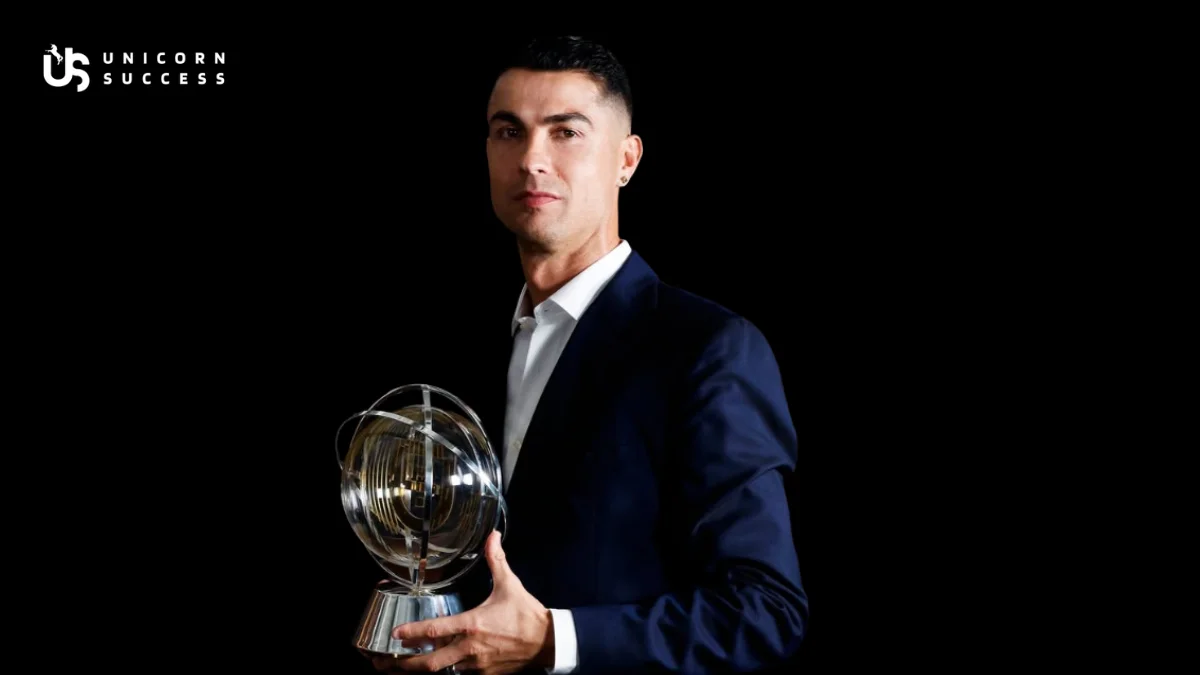
Cristiano Ronaldo, the iconic footballer and global symbol of excellence, has reshaped the world’s understanding of discipline, ambition, and what it truly means to chase greatness. From breaking records across Europe’s top leagues to redefining longevity in sports, Ronaldo’s career is a masterclass in work ethic, mental toughness, and sustaining elite performance long after others peak.
His obsession with improvement, refusal to settle, and unwavering belief in his own potential have inspired athletes, entrepreneurs, leaders, and dreamers across industries. Whether pushing physical limits, reinventing his game, or raising the standards of every team he joins, Ronaldo has become one of the most influential figures in modern sports and personal development.
To understand the mindset, habits, and leadership lessons behind his rise, we asked 10 leaders from diverse fields:
What is the one powerful lesson you learned from Cristiano Ronaldo, and how has it shaped your approach to discipline, leadership, or high performance?
Their insights reveal actionable takeaways on consistency, resilience, reinvention, competitive energy, and doing the hard work when no one is watching. These lessons offer a blueprint for anyone striving for excellence—whether you’re building a career, leading a team, or pursuing mastery in a rapidly evolving world.
10 Deep, Game-Changing Lessons Cristiano Ronaldo Teaches About Success, Consistency, and High Performance:
1. Rewrite the Rules After Rejection
One powerful lesson I’ve taken from Cristiano Ronaldo isn’t about athleticism or even discipline — it’s about reinvention in the face of rejection.
People forget that when Ronaldo returned to Manchester United in 2021, it was supposed to be a storybook comeback. Instead, it got messy. The media tore into him. His role was questioned. Critics said he couldn’t adapt to a modern style of play. Eventually, he left under a cloud of tension, and it looked like a sad final act to an otherwise legendary career.
And then? He flipped the script completely.
He took a risk and signed with Al Nassr in Saudi Arabia — a league most players viewed as a step down. But Ronaldo didn’t treat it like that. He turned it into a stage. A launchpad. He leaned into media visibility, brought global attention to the league, and basically redefined what “legacy” looks like for a late-career athlete. He made himself useful again — but on his own terms.
That hit me hard as a founder.
There was a point in my journey where one of our early product launches flopped. Hard. We’d built features based on assumptions that didn’t hold up in the real world. I remember sitting with my team on a Friday night, thinking: “Did we just waste six months of work?”
It would’ve been easy to quietly pivot and pretend it never happened. But instead, I took a page from Ronaldo’s playbook: I reframed the narrative. We didn’t just pivot — we owned the misfire. We wrote a postmortem, talked openly with users about what we learned, and rebuilt from the feedback we got. The second version of that product is now one of our core features.
What Ronaldo showed me is this: rejection isn’t the end. It’s an invitation to evolve, if you’re willing to rewrite the rules for what winning looks like.
– Derek Pankaew, CEO & Founder, Listening.com
2. Small Daily Improvements Create Big Results
Cristiano Ronaldo has taught me a lot about the importance of being disciplined and consistent. Talent gets you going, but it’s your daily habits that will help you succeed in the long run. When I took over Tudos.no, I used this way of thinking right away. Instead of trying to make big, dramatic changes, I worked on making one small part of the business better every day, like email flows, product pages, and internal routines. These small changes added up to big growth, just like Ronaldo’s dedication to getting to work early and doing extra work. Ronaldo staying after team practice to work on certain moves is always the first thing that comes to mind. In business, the same thing is true when you decide to improve a customer’s experience or a marketing channel even when no one is watching. That level of consistency over a period of months is often what makes the difference between average and great results.
– Trond Nyland, CEO & Owner, Tudos.no AS
Related: Lessons We Can Learn from Lionel Messi
3. Show Up Regardless of Conditions
Cristiano Ronaldo inspires me to maintain consistency in relation to anything I do in life, whether it is building products, constructing teams, or even forming my habits. The value of consistency is what I got from Ronaldo.
Without a doubt, Ronaldo is one of a kind. But what makes him unique is how he improves himself. I believe that I have the right to say that he does it in a disciplined manner. He performs extra training sessions by doubling what his colleagues do. He adds more time to his recovery to become more accustomed to his routine. Every new season is a new challenge for him.
He showed an example to everyone when he got injured in the 2016 Euro Final. Most players would take a step back and not get involved when an injury occurs. But Ronaldo kept himself involved by coaching his teammates from the sidelines. He showed everyone that even the most important players of the squad need to keep being involved.
I made sure to bring that into AskZyro. Startups never go according to plan. When we first began to tackle product vision, there were times we hit walls or had to pivot from tech roadmaps due to inflection points. Then, instead of stepping back, I leaned into a Ronaldo-style mindset of being consistent, involved, and bringing the team along with me.
Ronaldo shows that simply existing is not enough. Identify what needs to be done and tackle that problem in whatever way necessary. Never let the conditions dictate your attitude. Your tenacity to show up is what counts—far more than singular moments of genius, far more than flawless victories. The discipline to show up, put your head down, and work is success.
– James Allsopp, Founder, AskZyro
4. Deliberate Obsession Sustains Relevance and Greatness
What Cristiano Ronaldo has shown me is the power of deliberate obsession. Not the kind you see in motivational posters, but true, actual, serious obsession, and that’s to pick what you want and arrange your whole world so you can be the sort of person who can get it.
One area of his improvement, and one of his most impressive transformations, is what he has been able to accomplish with his game after leaving Real Madrid. Players’ performances often decrease when they reach their thirties, but that didn’t happen with Ronaldo. He overhauled his entire game, including his training, nutrition, and even his playing position in the box. From an explosion-heavy winger, he transformed into a penalty area poacher and shooter, no longer relying so heavily on his acceleration and power.
The lesson is that talent can get you noticed, but reinvention keeps you relevant. Ronaldo approaches his improvement as if it were his job, not his hobby. And longevity and greatness are not things that are bestowed upon you. You make them by not resting on your laurels and by being tough-minded enough to be honest with yourself about what you need to change.
It’s not glamorous, but it succeeds.
– Fred McGill, Owner, Bray Electrical
5. Refuse to Accept Second Place
I watch Cristiano Ronaldo, and the one thing I see is he just hates being beaten. That’s what keeps him at the top year after year. At my Zentro Internet team, we started tracking our toughest competitor’s numbers and made it our mission to beat them every single week. We broke our sales records, and the team actually had fun doing it. Not wanting to be in second place is what gets you the big wins.
– Andrew Dunn, Vice President of Marketing, Zentro Internet
6. Adapt to Limitations Instead of Fight
What struck me about Ronaldo is how he changed his entire playing style when his body couldn’t do what it used to. At 30, he stopped being a winger who dribbled past five players and repositioned himself as a pure goal scorer in the box. He adapted to his limitations instead of fighting them.
I did the same with my agency. I used to code every project myself, pulling all-nighters to meet deadlines. At some point, my brain just couldn’t handle 12-hour coding sessions anymore. Instead of burning out trying to keep up, I hired two junior developers and shifted to architecture and client strategy. Revenue actually doubled because I focused on what I’m better at now, not what I used to be good at.
– Nirmal Gyanwali, Website Designer, Nirmal Web Studio
Also Read: Lessons We Can Learn from Sam Altman (CEO of OpenAI, ChatGPT)
7. Transform Criticism Into Fuel for Growth
The most valuable lesson I have gained from watching Cristiano Ronaldo’s career is to utilize criticism and setbacks to motivate oneself for personal improvement. Criticism and setbacks are numerous for Ronaldo; however, he continually utilizes the external critique as fuel to become an even greater player.
This type of resilience can also be applied to the corporate environment, where companies experience constant critiques from investors, competitors, and customers. One could easily dismiss or disregard such critiques; however, Ronaldo’s experiences have demonstrated to me the importance of accepting and utilizing such critiques to create opportunities for growth.
Successful organizations do not merely respond to criticisms and setbacks by dismissing them. Instead, they systematically determine what issues are at the root of the criticisms and develop a strategy to rectify the deficiencies.
Organizations that proactively apply a structured process to respond to criticisms and setbacks will ultimately convert such criticisms into a template for validation and further optimization of their products or services. Successful organizations recognize that criticism provides an opportunity to improve their offerings and increase the strength and viability of their organization.
Cristiano Ronaldo’s capacity to convert doubters’ opinions into motivation is a lesson that may be applied in multiple industries and functional capacities. In today’s fast-paced, competitive work environment, it is very easy to become sidetracked by naysayers and setbacks. However, by modeling Ronaldo’s resilience and using critics’ comments as a stimulus for development, leaders will enable their employees to remain focused and adaptable while continuously setting new standards.
– Ryan McDonald, COO, Resell Calendar
8. Master Pressure Through Positive Self-Talk
One powerful lesson I’ve learned from Cristiano Ronaldo was last year when I found a LinkedIn post about him taking a penalty. The way he uses positive self-talk to control pressure and manage his mental state. Before taking a penalty, you can hear him repeat things like “You can, you can.” Then he shifts to “Cross the barrier, the same as always,” reminding himself he has handled situations like that before. And finally, “It’s normal for you to score,” which reconnects him with his identity and past success. That combination of motivation, instruction, and self-belief is something anyone can use when stepping into a high-pressure moment.
– Heinz Klemann, Senior Marketing Consultant, BeastBI GmbH
9. Persistence Outperforms Natural Talent
Discipline beats talent. Cristiano Ronaldo wasn’t the most naturally gifted player — but he out-trained and out-focused everyone. That’s why he’s at the top.
In my podcast studio, the creators who win aren’t the ones with the best ideas. They’re the ones who keep showing up, week after week, even when the views are low and life gets busy.
Ronaldo proves one thing: persistence and consistency are the real difference-makers.
– Daniel Camer, Creative Director, That Toronto Podcast Studio
10. Protect Your Momentum—It’s Your Most Valuable Asset
One lesson I’ve taken from watching Cristiano Ronaldo over the years is his ability to protect momentum at all costs. Not talent. Not motivation. Momentum.
Ronaldo never lets a dip spiral.
Miss a penalty? He demands the ball again.
Have a poor game? He’s in the gym that night correcting it.
Critics talking? He scores twice the next match.
The man understands something most people overlook:
Momentum is fragile, and if you don’t guard it fiercely, you lose your edge.
I learned this the hard way in my journey with RyseVisibility.
There was a month when we onboarded several new clients at once. The team was stretched, I was juggling sales and strategy, and for the first time, our delivery pace slowed. One delayed task turned into three. A skipped quality check snowballed into a stressed team and an unhappy client.
It wasn’t a lack of skill. It wasn’t a lack of effort.
It was a break in momentum — and everything downstream suffered.
That’s when I thought of Ronaldo.
He never lets one off day turn into two.
He course-corrects instantly.
He moves with urgency before friction grows roots.
So I rebuilt our workflow around momentum:
- shorter feedback loops
- tighter internal reviews
- daily micro-adjustments instead of weekly overhauls
- early warning signals for bottlenecks
Within weeks, we were not just back on track — we were operating smoother than ever.
Ronaldo taught me this: Success doesn’t collapse suddenly — it erodes slowly when momentum is ignored. Protect it, and you’ll stay ahead far longer than those who rely solely on talent or motivation.
– Ram Thakur, Founder, RyseVisibility
You May Like: How Brandon Leibowitz Built SEO Optimizers Into a $1M+ Digital Marketing Agency
Conclusion
Cristiano Ronaldo’s journey proves that world-class greatness isn’t built on talent alone — it’s built on discipline, consistency, and an obsession with outworking yesterday’s version of yourself. His mindset is a reminder that peak performers aren’t shaped by perfect conditions, but by relentless habits and the refusal to settle.
Apply these principles consistently, and you won’t just improve your skills — you’ll sharpen your mentality, elevate your standards, and build a life designed to win.
Now it’s your turn…
Which of Ronaldo’s lessons hits you the hardest?
What’s one shift you’re ready to make in how you work, train, or lead?
Share your thoughts below — we’d love to hear your perspective! 👇
If this sparked something in you, pass it along to someone who’s ready to raise their game.