25 Lessons from Virat Kohli, India’s Cricket Icon
Virat Kohli’s career is a masterclass in consistency, discipline, and relentless self-improvement. In this feature, 25 founders and leaders share the most powerful lessons you can apply from his mindset—helping you strengthen your resilience, sharpen your focus, and perform at your best under pressure.
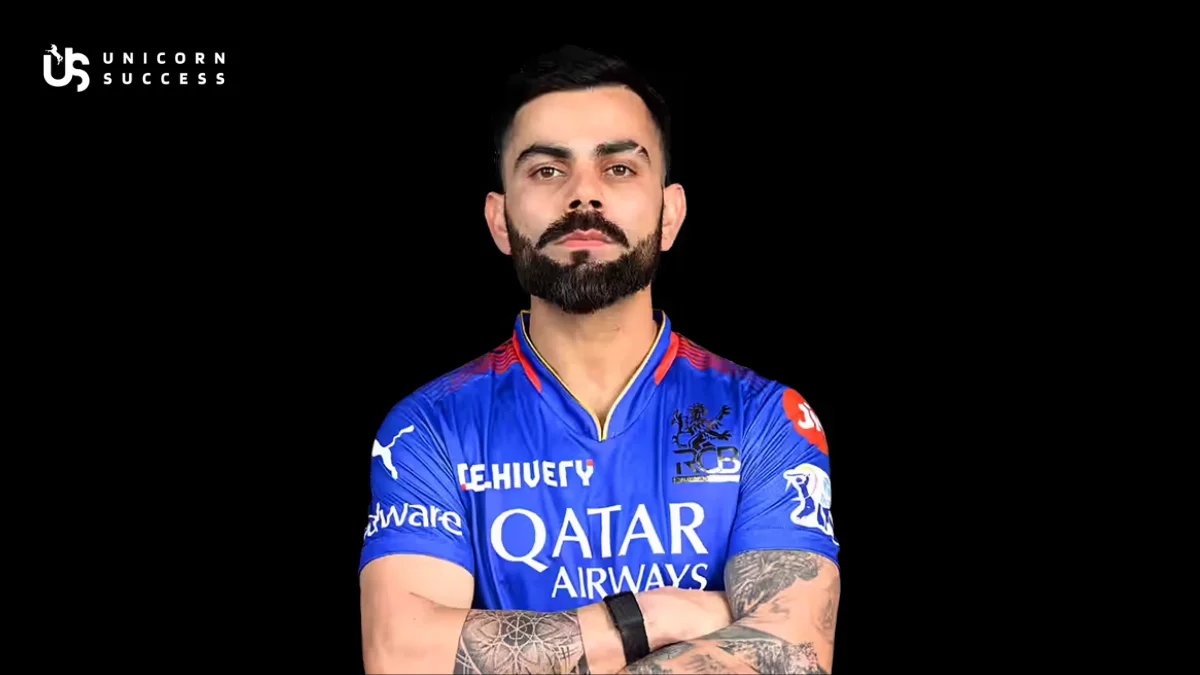
Virat Kohli is more than a cricket superstar. With 274M+ Instagram followers and an estimated net worth of $126–127 million (₹1,050 crore) as of late 2025, he represents a global standard—of preparation, accountability, and relentless improvement—that extends far beyond the pitch. Across formats, eras, and pressure situations, Kohli has shown that sustained excellence isn’t accidental; it’s built daily through discipline, adaptability, and an uncompromising commitment to growth.
What sets Kohli apart isn’t just talent or fame. It’s his willingness to review himself honestly, evolve his game, and raise standards even when he’s already at the top. From rebuilding his fitness and mental resilience to adjusting his approach during slumps and comebacks, his journey closely mirrors the realities founders, operators, and leaders face in high-stakes environments where complacency is costly and growth is earned.
To understand how Kohli’s mindset translates into business, leadership, and life, we asked 25 founders, CEOs, and professionals one simple question:
What is one powerful lesson you’ve learned from Virat Kohli, and how has it shaped the way you perform, lead, or adapt under pressure?
Their responses reveal practical insights on consistency, accountability, resilience, data-driven improvement, and leading by example—lessons that apply whether you’re building a company, managing a team, or pushing through your own toughest phase.
25 Powerful Lessons from Virat Kohli’s Career to Strengthen Your Discipline and Leadership:
1. Show Up, Improve, Let Results Speak
Watching Virat Kohli bat through pressure reminds me of starting out as a woman engineer. Some people doubted me, but I just put my head down and got better, day by day, like he does at the crease. The work eventually spoke for itself and the clients came around. Turns out, just showing up and doing the job well is what actually matters.
– Lara Woodham, Director, Rowlen Boiler Services
2. Reset Focus, Chase the Long Game
Watching Virat Kohli fight back through a rough patch taught me something practical. When my marketing campaigns hit a wall, I now stop, reset my focus on the bigger picture, and get back to work. His comeback wasn’t magic, just relentless effort. It’s the same in business. Pushing through the immediate noise to focus on the long-term goal is what actually gets results.
– Andrew Dunn, Vice President of Marketing, Zentro Internet
Related: Lessons from PayPal CEO Alex Chriss
3. Lead With Candor to Unlock Hidden Solutions
Watching Virat Kohli handle pressure is interesting because he’s just so direct. I tried that at Lusha when our project was behind. I called a team meeting and laid out every problem, no corporate jargon. Suddenly, a junior developer who’d been quiet pitched an idea that got us back on track. Being direct unlocks solutions you never see coming.
– Yarden Morgan, Director of Growth, Lusha
4. Experiment Boldly and Update to Win
Watching Virat Kohli evolve his game changed how we handle marketing at Plasthetix. We used to rely on what worked yesterday, but now we experiment with every new digital trend that comes along. It’s actually working. We’re getting better results because we stopped playing it safe and started updating our campaigns all the time.
– Josiah Lipsmeyer, Founder, Plasthetix Plastic Surgery Marketing
5. Own Failure, Pause, Then Choose Better
Watching Virat Kohli taught me something useful about failure. He owns the setback and immediately looks for the next play. When our adolescent mental health programs hit a wall, we did the same thing. We paused, talked about what went wrong, and tried a different approach. Giving your team that moment to breathe after things fall apart is how you actually move forward.
– Aja Chavez, Executive Director, Mission Prep Healthcare
6. Persist and Tweak Until It Clicks
The main thing I learned from Virat Kohli is just don’t quit. I had an SEO campaign that was dead flat for six months. Instead of scrapping it, I kept checking the data and making small tweaks. Then it just started working. It’s the same idea as Kohli fighting his way back into form. You stick with your plan and keep adjusting until it finally clicks.
– Justin Herring, Founder and CEO, YEAH! Local
7. Choose Consistency and Small Daily Improvements
What I learned from watching Virat Kohli comes down to consistency. No matter how big the match, he sticks to his practice routines. When I was building UrbanPro, the market kept shifting and I hit a lot of walls.
But showing up every day and making small, steady improvements is what actually got me through. My advice for tutors is the same. Forget the big leap, just focus on getting a little better each day.
– Rakesh Kalra, Founder and CEO, UrbanPro Tutor Jobs
Related: Lessons We Can Learn from Walmart CEO Doug McMillon
8. Be Bold, Check Risks, Pivot Fast
Watching Virat Kohli play, I see how he leads aggressively but never blindly. In SaaS consulting, it’s the same. We’ll push for a big bet, but only after checking the risks and being ready to pivot fast, just like he does when the game’s on the line. This mix of bold moves and smart planning doesn’t fix everything, but our clients get better results because of it.
– Karl Threadgold, Managing Director, Threadgold Consulting
9. Adopt New Tech Early for Edge
Virat Kohli’s adaptation to modern cricket shows how changing your approach can elevate your work. At Magic Hour, we started using AI and our creative process is much faster now, letting us react to trends as they happen. If you lead a creative team, just try the new tech. Getting on board early usually gives you an edge.
– Runbo Li, CEO, Magic Hour
10. Treat Failures as Data, Then Adjust
Honestly, the way Virat Kohli handles a bad day is what sticks with me in business. Things always go wrong. I remember a social media campaign that flopped in a week. We didn’t panic, we just looked at the data, figured out what we messed up, and adjusted.
It’s like Kohli re-evaluating his game after a rough match. If you treat failures as data points, your team won’t be scared to try again. They’ll just get smarter next time.
– David Cornado, Partner, French Teachers Association of Hong Kong
11. Lead From the Front Under Pressure
Watching Virat Kohli play changed my thinking about leadership. When things get tough, he doesn’t give speeches, he just goes out and scores. That consistency under pressure is contagious. I’ve found the same thing in my work.
When I stay visible and hands-on during a rough patch, my team steps up. They perform better because they see I’m right there with them, not just telling them what to do.
– Bennett Maxwell, CEO, Franchise KI
Also Read: Lessons from Cristiano Ronaldo
12. Discipline Builds Resilience and Sustained Success
And a strong message that I have picked up from someone like Virat Kohli is the importance of discipline and bouncing back with determination in moments of failure. Kohli’s career is replete with examples where he monetised challenges by investing in himself, through fitness, mental strength and consistency.
A turning point occurred during his form slump when pundits queried whether he should be in the starting XI. Rather than succumbing to the pressure, Kohli redoubled his applications in fitness and mental preparedness. He was open about his “all my cricket has been mental,” making a point about cricket in which mindset is as important as skill. His hundred against Pakistan in the ICC Champions Trophy 2025, it wasn’t just about runs it was about a resilience statement that said you can shut up doubt with patience and beliefLinkedIn.
Another example is his evolution into one of cricket’s shapest and fittest athletes. Kohli completely changed the Indian team’s fitness lifestyle with strength training, a strict diet and recovery sessions. This pursuit did more than improve his own game it set the bar higher for everyone on his side, showing how personal effort can provoke collective improvement.
The lesson is unmistakable: discipline breeds resilience and resilience brings success. In sports, in business and anywhere else for that matter loss can be inevitable, BUT it is our preparation and how we respond to failure that seals our legacy.
– Amir Husen, Content Writer, SEO Specialist & Associate, ICS Legal
13. Secure the Body to Secure Performance
The powerful lesson I learned from Virat Kohli is the Non-Negotiable Commitment to Structural Fitness as a Professional Mandate. The conflict is the trade-off: traditional athletes often relied on talent, which led to a massive structural failure later in their careers; Kohli enforces disciplined fitness not as an abstract hobby, but as a verifiable necessity for heavy duty performance in a high-stakes environment.
My initial perspective was that physical conditioning was secondary to technical skill. Kohli’s example proved that the body is the primary structural asset that must be secured first. The lesson is applied through my Hands-on “Physical Readiness Audit.” Just as Kohli meticulously manages his diet and training to eliminate the structural weakness of fatigue, I view my personal fitness routine as the first step in guaranteeing the integrity of the job site.
This commitment helps me stay engaged because it links personal discipline directly to verifiable professional output. By eliminating the variable of fatigue, I secure my ability to perform complex, hands-on structural auditing during long, high-stress projects.
The strength that emerges is sustained focus and resilience under pressure. The best lesson learned is to be a person who is committed to a simple, hands-on solution that prioritizes securing the structural integrity of the primary asset—the body—to guarantee professional competence.
– Ahmad Faiz, Owner, Achilles Roofing and Exteriors
14. Make Relentlessness Measurable to Drive Excellence
The most powerful lesson I’ve learned from Virat Kohli, which completely applies to running Co-Wear, is the concept of “Measurable Relentlessness.” He didn’t rely on sporadic bursts of brilliance; he mastered the process of performing with high, sustained intensity—the operational definition of competence.
The lesson is this: Commitment must be quantifiable. While other players focused on talent, Kohli obsessed over the 1% gains in every phase of his training, fitness, and diet. For example, he completely overhauled his physical conditioning to maintain peak performance during the high-stress, low-downtime chaos of tournament play.
This completely changed how I approach my business operations. I stopped accepting excuses for performance dips. I now treat every function at Co-Wear—from marketing campaigns to warehouse shifts—as an area to be obsessed over and engineered for sustained, high-intensity output. It proves that world-class success is not about random genius, but about patiently and relentlessly perfecting the measurable process.
– Flavia Estrada, Business Owner, Co-Wear LLC
Related: Lessons We Can Learn from Lionel Messi
15. Let Discipline Anchor Identity and Growth
Virat Kohli reminds me of the quiet shift we sometimes see at Sunny Glen Children’s Home when a kid decides to stop proving themselves to everyone else and starts showing up for the small habits that build real strength. The most powerful lesson from him is how discipline becomes its own kind of anchor.
His intensity on the field is obvious, but the steadiness behind it comes from routines he follows when no one is watching. That mirrors the teens here who slowly rebuild their confidence by sticking to one promise at a time, whether it is finishing homework before dinner or taking a morning walk to clear their mind.
Kohli talks openly about how he changed his lifestyle to match the player he wanted to become. That shift taught me that identity grows out of consistent choices, not grand gestures. We saw something similar with a boy who struggled with frustration for years. He started practicing a simple breathing pattern before speaking during group time.
Within weeks he carried himself with a different kind of presence. His progress was not about force but about disciplined intention. Kohli’s reminder is the same. When your daily actions align with who you hope to be, the bigger moments feel less like pressure and more like proof that the work is taking root.
– Belle Florendo, Marketing coordinator, Sunny Glen Children’s Home
16. Adjust Quickly or Lose the Match
The thing about Virat Kohli is how he adapts when conditions on the field change. That reminded me of work. We changed how we handle feedback at Prezlab about six months back, and sudden market changes don’t wreck our week anymore. Kohli will switch his whole approach mid-game if he has to. It made me see that in our SaaS business, just like in cricket, you either adjust quickly or you lose.
– Ibrahim Alnabelsi, VP – New Ventures, Prezlab
17. Stay Flexible; Change Fast When Needed
Watching Virat Kohli chase a tough total reminds me of our fintech days. Things constantly went sideways. I remember one time we had to scrap our whole partnership approach mid-deal. It was messy, but that’s how we made it work. My advice is just stay flexible. If something isn’t working, change it fast. Don’t get attached to the plan.
– Sreekrishnaa Srikanthan, Head of Growth, Finofo
18. Protect Morale With Honest, Forward Conversations
Watching Virat Kohli after a tough loss showed me how important it is to not let a team’s morale drop. It’s the exact same thing in marketing. When a campaign goes sideways, I try to do what he does: get everyone in a room, talk honestly about what happened and what we learned, then get ready for the next play.
– Brandon Brown, CEO, Search Party
19. Raise Standards; Give Extra Effort When Unseen
Virat Kohli showed me intensity with purpose. It feel odd at first to watch someone look almost angry while scoring, but funny thing is a litle clip where he sprinted a second run on a routine shot kinda made me think about effort when nobody expects it.
Later I used that same mindset during a rough quarter at Advanced Professional Accounting Services and it were abit surprising how small extra pushes lifted a stalled project back on track. Sometimes consistency is passion in motion.
Not sure why but watching him refuse to coast taught me that standards should not drop just because the moment looks easy. Honestly the lesson is simple play every ball like it matters.
– Rebecca Brocard Santiago, Owner, Advanced Professional Accounting Services
Must Read: How Makena Finger Zannini Scaled The Boutique COO to $1M in Just 8 Months
20. Own Outcomes and Demand Relentless Standards
The most powerful lesson I’ve taken from watching Virat Kohli is the concept of relentless intensity paired with total self-accountability. It’s not just about talent; it’s about demanding excellence from yourself every single time you step up. As a business owner here at Honeycomb Air, the minute I start settling for “good enough” is the minute we stop earning the trust of the San Antonio community.
Kohli operates with the mindset that he should be the one to finish the job, no matter the score or the pressure. In cricket, he doesn’t rely on others to win the match; he prepares and performs to be the deciding factor himself.
We apply this lesson directly to our HVAC service. When a technician is sent out on a major repair, we demand they take that same sense of personal ownership. They don’t just patch the system; they ensure the repair is complete and the customer is comfortable before they leave the site, taking full accountability for the outcome.
Here’s the example: when Kohli has a rough game, he doesn’t blame the pitch or his teammates—he doubles down on his training and corrects his own weaknesses. Last year, we had a stretch where our customer call-backs for minor issues were too high.
Instead of blaming the scheduling or the parts, I sat down with my team, and we owned the problem. We changed our training to focus intensely on the pre-departure checklist. That accountability—that commitment to fixing our own errors first—is exactly the high-performance culture that separates a good company from a truly great one.
– Brandon Caputo, Owner, Honeycomb Heating and Cooling
21. Play the Long Game, Build Durable Systems
Watching Virat Kohli, I learned to focus on what lasts, not just quick wins. In real estate, we kept getting tempted by fast property flips, but we ended up building systems that made our business more stable. Focusing on the long game feels slow at first, but it pays off way more than trying to score big on every single deal.
– Ryan Dosenberry, CEO, Crushing REI
22. Build a Routine; Let Consistency Compound
Watching Virat Kohli’s discipline reminded me of our work at Superpower. We struggled with data tracking for months, but once we built a consistent system, the improvements came fast. It wasn’t about some big breakthrough, just doing the same work every day, especially on the days I didn’t want to. My advice is to find a routine that works and stick with it. That’s it.
– Max Marchione, Co-Founder, Superpower
23. Model Accountability to Build Team Trust
Amongst the lessons I have picked from Virat Kohli, being accountable for oneself is something which isn’t an option if I have to lead effectively. Virat Kohli’s honesty about his not-so-good days, along with his moments of joy, is something I have attempted to incorporate in my own professional life.
One such example occurred during a period in which our service delivery process wasn’t, shall we say, running like clockwork. My initial response was to point to external problems: contractor issues, communication issues with clients, you know, problems I simply could not control.
But recognizing how Kohli accepted blame for things not specifically his fault in those moments encouraged me to think about improving in my own way. I stopped, took blame for what I hadn’t successfully controlled, and refound our process from there.
Everything changed. Team spirit was enhanced, communication became unambiguous, and performance regained momentum due to the fact that responsibility for each action built trust, not angst and irritation.
What I have learned from Kohli’s mindset is that leadership is not about being faultless, in fact, it’s about accepting those errors in such a manner that your entire team is able to move forward together.
– Andrew Phelps, Owner, San Diego Service Group
24. Turn Pressure Into Clarity With Structure
One of the most important things that I learned from Virat Kohli has been that he knows how to turn pressure into focus and not fear. He does not shy away from pressure situations but approaches them with deliberate aggression.
One area that has shown his strength is in chasing down runs in limited-over matches. Kohli has earned recognition as one of those cricketers who marks his presence by scoring heavily when his side is chasing a high target and when everyone, including himself, expects something special. But he does not get under pressure and lose his grip over his shots. He splits his target into small parts, such as overs, partnerships, and bowlers against whom he can score cricketing shots.
The take-away here is very straightforward and very powerful: it’s not pressure that’s the problem. The problem is a lack of clarity. And if you can face tough moments with structure, with presence, with confidence in your preparation, then you can turn tough moments into your strongest moments. This is what Kohli does each time he goes out there to get an impossible target.
– Fred McGill Jr, Owner, Bray Electrical
25. Let Data Drive Relentless, Incremental Improvement
One powerful lesson from Virat Kohli is the importance of relentless consistency and adapting your approach based on data and feedback.
Kohli transformed himself from an aggressive, inconsistent batsman in his early career to one of cricket’s most disciplined and technically sound players by continuously analyzing his performance, identifying weaknesses, and systematically working to eliminate them.
Early in his career, Kohli struggled against short-pitched deliveries and had technical flaws against pace bowling. Rather than ignoring these gaps, he invested time in understanding the problem.
Studying bowlers’ strategies, adjusting his footwork, and working with coaches to refine his technique. This data-driven approach to self-improvement resulted in him becoming one of the most consistent performers across all formats, dominating both at home and abroad.
The lesson applies beyond cricket: success isn’t about raw talent alone, it’s about the discipline to regularly assess your performance, identify gaps without ego, and commit to incremental improvements.
For entrepreneurs and business professionals, this means continuously tracking metrics, seeking feedback, and refining strategies based on real data rather than assumptions. Kohli’s career demonstrates that sustained excellence comes from treating yourself as a project requiring constant optimization and evolution.
– Shishir Dubey, Founder, Jungle Revives
Conclusion
Virat Kohli’s legacy isn’t built on highlight reels alone—it’s built on discipline, accountability, and the refusal to settle for “good enough.” Across every lesson shared here, one truth stands out: high performance is a daily choice, not a one-time achievement.
Kohli doesn’t hide from failure. He studies it. He doesn’t wait for confidence to arrive—he builds it through preparation, fitness, and consistency. Whether adapting mid-match, rebuilding after a slump, or leading from the front when pressure peaks, his approach shows that resilience is earned through structure and self-honesty.
For founders, leaders, and professionals navigating uncertainty, his playbook is clear: review yourself without ego, improve relentlessly, and show up prepared when it matters most.
So if you want lasting success, not short-term wins…
Don’t rely on talent alone. Build discipline. Perform like Kohli.
Must Read: How Bryan Clayton Scaled GreenPal to $1M Revenue in 3 Years