

How Amit Agrawal Scaled Cyber Infrastructure Into a Multi-Million-Dollar Software Engineering and Digital Transformation Company
In this interview, Amit Agrawal, Founder and COO of Cyber Infrastructure, shares how he built a global software engineering and digital transformation company by solving one of the biggest challenges in tech: execution. From starting with relationship-driven projects to scaling into a multi-million-dollar business serving clients worldwide, his journey shows how strong systems, consistent delivery, and long-term trust can turn complex ideas into reliable, scalable technology solutions.
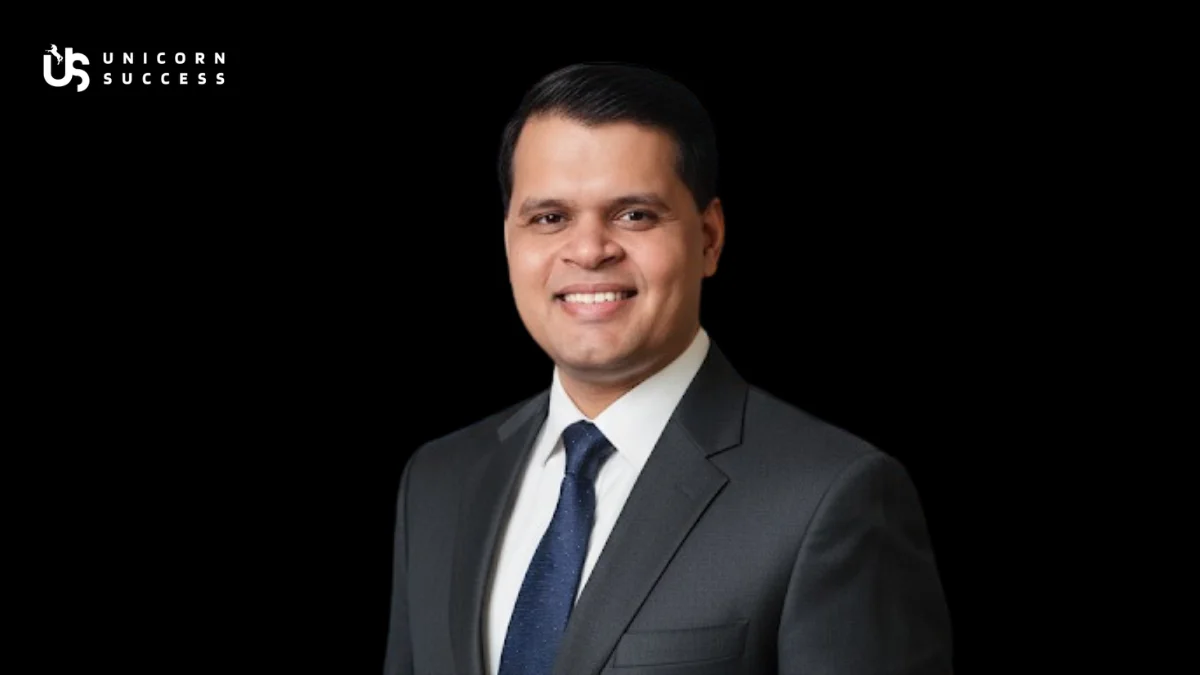
Tell us your name, your company name, and what your business does.
I am Amit Agrawal, the Founder and COO of Cyber Infrastructure. CIS develops digital solutions for businesses by designing, developing, updating, and scaling their technology products and platforms. We work in custom software development, web and mobile apps (iOS/Android), AI solutions, enterprise systems (ERP, CRM), Cloud computing, Blockchain, and staff augmentation through dedicated development teams.
In practical terms, we help clients bridge the gap between their business idea and successful execution. Many companies know what they want to create, but lack sufficient engineering resources, delivery processes, or technology leadership to execute those projects predictably. CIS becomes the execution partner for those companies.
Over the last several years, we have partnered with clients around the world and delivered thousands of projects across multiple industries.
What inspired you to start this business?
I was motivated to create CIS after repeatedly observing the same trend in the technology industry: great ideas fail due to poor execution.
I’ve witnessed many companies pour money into their software projects, only to see their implementations delayed, go way over budget, be hard to maintain, or never launch. While I acknowledge that the implementation of a software project and its execution can be challenging, the issue is usually related to poor communication and/or unclear or ineffective delivery of ownership.
This gap has intrigued me. I wanted to build a firm that could leverage technology expertise with operational discipline, a firm that would assist clients in converting their concepts into workable, scalable, useful software.
CIS wasn’t founded to capitalize on a trend but because we strongly believe that the effective execution of technology provides significant value to business.
Did you have a background in this industry before starting out?
I have an extensive background in technology, software development, delivery management, and business operations. I’ve been involved with virtually all phases of CIS’s development, including project execution and client communication, team building, budgeting, and delivery systems. This diverse background has given me a wealth of experience and knowledge about all the components necessary to build a services company from the ground up, including technical competence, interpersonal skills, process, trust, quality control, and business disciplines.
Throughout my career, I have continued to develop my perspective on management and business through both formal executive education programs and real-world operational experience. It is this combination of technical capabilities and operational experience that has allowed me to successfully develop CIS.
How did you land your first few customers?
We acquired our initial customers through trusted relationships. We contacted individuals we were familiar with because they had witnessed our work ethic, technical skills, and our honest attitude beforehand; therefore, trust was our entry into the door, but once we did that, we needed to keep the door open through delivery.
During that initial period, we focused on trying to underpromise and overdeliver on every project. Pricing was one way we were competitive, but more so, each project we would have the mindset of looking at the long term and assigning an asset of our reputation for each project. This was due to the fact that at that time in our history, case studies, referrals, and general trust in our work were more critical than the immediate profit margin associated with the project.
Our first projects created the basis of our portfolio and contributed to organically growing future projects through customer word-of-mouth.
What was your business model when you started, and has it changed?
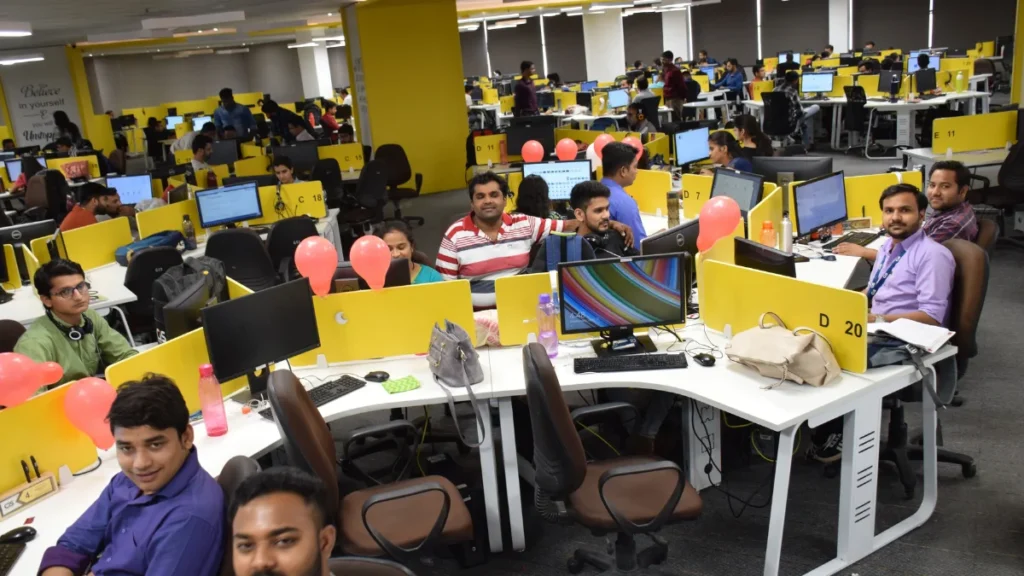
The business’s original model was to build software for clients using a project-based methodology. Each client provided us with a requirement or set of requirements that they needed help solving. We would estimate the amount of work (via a quote), sign the scope of work (in the form of a signed contract), and deliver the solution.
As time passed, our business model has changed considerably.
All of a sudden, clients physically wanted technology, but they did not want to hire another vendor to solve another problem. They wanted a partner who would provide them with long-term technology solutions that would continue to push for better results. They wanted trusted partners willing to participate in a relationship-based engagement where they share in the business goals and objectives of their partner company.
In addition to building dedicated teams to support long-term customer relationships, we also developed staff augmentation and project management services. Other forms of engagement have included providing retainer agreements, staff augmentation, maintenance/support, and providing ongoing technology partnerships.
In some instances, our relationship with a client exceeds the boundaries of simply executing the project and has evolved to where we work hand in hand with the client’s staff to develop technology-based solutions that will provide them with a roadmap for planning and implementation of their technology systems.
Read More: How Jamie Maltabes Built Infinite Medical Group into a $3M Wellness and Regenerative Health Brand
What was your timeline to $1 million in revenue?
Within approximately 18 months of launching the company, we achieved over $1 million in sales.
During our first 18 months, we did not pursue high-volume sales; instead, we built the company’s foundation by establishing our initial team, work processes for service delivery systems, methods of communicating with clients, and early case studies. After the foundational pieces were in place, referrals and repeat sales accelerated our revenue growth.
The major takeaway is that consistent revenue growth occurred after clients learned how we could consistently deliver results to them; once clients placed trust in our services, it was easier for them to refer us to others.
What was the biggest turning point in your growth journey?
The first major milestone for our business was acquiring a large enterprise customer. Before this acquisition, we’d primarily worked with startups and/or mid-sized companies. The engagement with our first large client very quickly raised the bar for us. We needed to improve documentation, project governance, recruiting standards, reporting, communication discipline, and delivery predictability almost overnight.
While this was a very difficult challenge, it has also helped us mature much faster than we would have on our own. This one engagement provided us with lessons that could have taken us years to learn on our own.
From that point on, we knew that if we wanted to cater to larger customers, we would need to have enterprise-level discipline throughout all aspects of our business, not just in our coding but throughout all of our processes, communication methods, security, quality, and accountability.
What marketing channels worked best in getting to $1M?
Referrals were the strongest lead source during our early years of operation. However, content creation and building credibility became an increasingly important part of generating leads over time. We invested heavily in communicating our own expertise via our website, demonstrating thought leadership, and joining in conversations relevant to both the technology and business worlds.
The only time outbound lead generation worked for us was when it was highly personalized and targeted toward each client’s needs. Sending out generic emails or calls is a waste of effort. However, whenever we were able to understand one of our clients’ challenges before contacting them, we created a valuable discussion.
No “silver bullet” or single magic channel was responsible for generating leads. Rather, it was a combined effort of creating referrals, consistently delivering results, having a credible online presence, and developing relationships through business development.
What were the top three challenges you faced while scaling?
Our biggest challenge was hiring engineers who had the ability to write quality code, communicate effectively with our clients, work in different time zones, and have a sense of ownership. We made mistakes in our hiring process during the early years, and the mistakes we made in hiring impacted the quality of the projects. Therefore, we learned to take the recruitment process, training of new hires, and performance management very seriously.
Our second biggest challenge was cash flow. When you own a services company, your business usually goes through peaks of high demand and valleys of slow collections. To manage these “ups and downs” without any outside financing took a great deal of discipline. Therefore, we had to be very careful about how we hired, collected payment on our invoices, determined our pricing, and made (and kept) project commitments to our clients.
Maintaining the same level of quality when scaling the business was our third biggest challenge. It is easy to deliver high-quality work when you are a company with a small number of employees.
Conversely, it is a significantly different challenge to continue to deliver high-quality work as your company grows from 10 employees to 100 employees, to hundreds of employees, and beyond. To accomplish this, we needed to have systems in place, as well as complete documentation, governance policies, middle management, and an accountability-based company culture.
Read More: How Andrew Hanson Built Cityscape LLC into a Multi-Million Dollar Real Estate Business
Was there a moment you felt like quitting?
There were challenging moments, in particular during the early development phase of the company. At one point, we had taken on too many responsibilities at once; tough projects, demanding customers, internal pressures, and frustrations regarding team morale made me question late at night whether the stress was worth it.
As an owner/founder, however, one also has to recognize that many people rely on the success of the company, employees and their families, customers, and partners. Therefore, you do not have an option to leave.
During this time, we made some very difficult decisions. We flattened out our organization, enhanced our overall processes, communicated openly amongst ourselves about the challenges we encountered, and also terminated some customer relationships that were not mutually beneficial. While it was a painful time for all concerned, it ultimately has made the Company stronger as a result of those experiences.
What is one early mistake that taught you something invaluable?
Initially, we erred by attempting to achieve too much at once. We pursue multiple areas and types of technology since so many opportunities are appealing. This leads to the inability to actually execute on an opportunity due to being spread out over multiple engagements.
We extended our resources further than what would allow us to succeed, thus weakening our positioning and inhibiting our ability to develop extensive technical expertise. This has proven true; and since we have developed extensive expertise in specific industries, we can therefore help clients develop their businesses based on our knowledge of and experience with the industry and clients’ requirements.
We establish greater discipline in developing related capabilities, processes, and industry knowledge as opposed to simply accepting every kind of project.
You May Like: How Divya Gugnani Scaled 5 SENS to a $1M+ Fragrance Brand in Its 1st Year
What is one thing about hitting $1M that no one talks about?
Reaching the $1 million mark is a great achievement, but it doesn’t relieve the pressure that comes along with it.
Many business owners think that hitting a $1M revenue milestone means they’ve finally arrived. In fact, crossing this threshold usually means more clients, more employees, increased accountability for you and others in your organization, and elevated marketplace expectations from your peers.
The true difference you will experience as your organization grows to this level will be psychological; rather than just survival, you’ll also begin considering how to maintain consistency and systems, provide great leadership for your team, and develop your organization’s ability to grow and scale.
Revenues are critical for the survival of every business. Unfortunately, however, revenues alone do not guarantee an easier way of doing business; there is simply a change in the types of problems created by the previous revenue size to the new revenue size.
How did your role evolve as the business grew?
My role evolved from one where I had done most everything and controlled all aspects of the operations, to one where I was to create systems for others to work within and empower others to be able to work.
At first, I was involved in nearly every major decision made by the company (e.g., projects, architecture/design, hiring, communicating with clients, solving problems, etc.), which is understandable early in a company; however, it will not allow a rapidly growing company to grow.
As the company has continued to expand/grow, I’ve had to develop the ability to provide overall direction, create processes to remove obstacles, develop leaders, and allow others to take ownership of their roles/areas.
The change from being a founder who is technical and operations/management-minded may not be easy; however, it must occur. A company will not be able to expand its operations if all major decisions need approval from one person.
If you had to start over, what would you do differently?
I would have built a company’s operating system much sooner. By operating system, I mean documented Processes, Playbooks, Training systems, Quality Assurance systems, Standards for communication with clients, reporting systems, and Frameworks for decision making.
In the early years of our company, we solved many of our problems by relying solely on the efforts of individuals. This can work when you have a small group of employees, but it does not work once you reach a larger number of employees. If there is no documentation of the process, the company keeps repeating the same mistakes.
If I had to restart the company, I would have invested more into systems, documentation, middle management, and creating a scalable delivery process. All these things may not seem as urgent when you start; however, they will ultimately determine how quickly and safely a company can grow.
Must Read: 18 Powerful Lessons from Liang Wenfeng, Founder of DeepSeek
Where is the company today, and what is next?
With a broad customer base worldwide across various industries, CIS has evolved into an internationally known software engineering and digital transformation company, supported by a sizable in-house development team.
At this time, our primary area of interest is in delivering solutions using Artificial Intelligence (AI), modernizing enterprise-level software, providing dedicated engineering teams, and assisting clients in adopting AI in their operations. We view AI as much more than merely a buzzword; it is the means by which we can deliver prospective clients with solutions that will result in lower costs, faster response times, better quality, and produce measurable business value.
CIS will continue to grow geographically through greater market penetration in North America, the Middle East, and other key markets. Additionally, we will develop new competencies focused on the application of AI, Software as a Service (SaaS), cloud computing, automation, and enterprise-level platforms.
What are you currently obsessed with in your business?
My current work focuses on creating and developing AI to assist engineering teams.
The main question I have is, “What does software delivery look like when you have a strong, human team supported by AI agents, automation, better tooling, and reusable knowledge base systems?”
We’re examining how small, senior-led teams can produce deliverables in less time while maintaining quality.
The key to success isn’t just producing code quicker; it’s also about improving estimation and documentation processes, testing, project governance, client communication, and new long-term maintenance opportunities.
While AI will not eliminate the need for strong engineering judgment, it will change what high-performing engineering teams look like in practice.
Do you still feel connected to the original mission?
Indeed, absolutely.
The original purpose was to assist companies in representing their concepts about how to utilize technology in practical, usable systems. This will continue unchanged.
The difference is the size and number of tools available. With AI, cloud, automation technology, and the use of contemporary engineering techniques, we can provide faster and broader solutions than at any time in the past.
However, the fundamental purpose will continue to be practical, which is to design and develop useful solutions that create value for an organization and help that organization to advance.
Best advice for entrepreneurs trying to hit their first $1M?
Before expanding your business, spend time building trust with potential clients.
Many entrepreneurs believe that they will find a ‘magic’ way to market their business; they look for the best way to get investors/funding, to find out how to hack their growth – quickly. However, these are all good points; they do not replace the fact that you must deliver.
In the early days of your business, every client is important; therefore, deliver quality, communicate effectively and honestly about your capabilities, solve real problems, and ask for referrals when you have demonstrated your ability to gain the trust of that customer.
The first $1 million of revenue will typically come by way of many frustrations along the way and by consistently completing what you have to do as a small business owner, it will not come from one ‘clever hack’.
Books, habits, or tools that played a key role?
Two books that have shaped my perspective are Eric Ries’s “The Lean Startup” and Cal Newport’s “Deep Work.” The Lean Startup has emphasized the significance of testing, learning, and re-evaluating when starting a business rather than operating under the assumption that the first version of an idea will automatically be accurate.
Deep Work has enlightened me about how to calculate and protect blocks of time to think, as my schedule as an entrepreneur becomes more reactionary. I have found that I can think more clearly, assess if I have the right direction, and be more able to take sound action during the early hours of the day before anyone else.
The most important habit I have had is reflection: I regularly ask myself what is working, what is not working, what should be made into a system of operation, and what I should stop doing.
Also Read: How Saurabh Bhatt Scaled Supportsoft to $1.3M Empowering SMEs with Scalable Tech
Inspired by Amit Agrawal’s journey building Cyber Infrastructure into a global multi-million-dollar technology company? Share this story with a fellow founder. It might be the push they need to build something scalable and lasting.
At Unicorn Success, we spotlight fearless founders and Zero to Million . Have one of your own? Submit it through our contact form—your journey could inspire entrepreneurs around the world.
