

How James Shaffer Scaled Insurance Panda Into a $1M+ Organic Search Insurance Business in 3 Years
In this interview, James Shaffer, Founder of Insurance Panda, shares how he scaled a bootstrapped insurance lead-generation business to $1M+ in revenue through organic search alone. From spotting a massive gap in honest insurance content to surviving brutal Google algorithm updates, his journey reveals how consistency, SEO mastery, and long-term thinking helped turn a simple content site into a high-performing digital business.
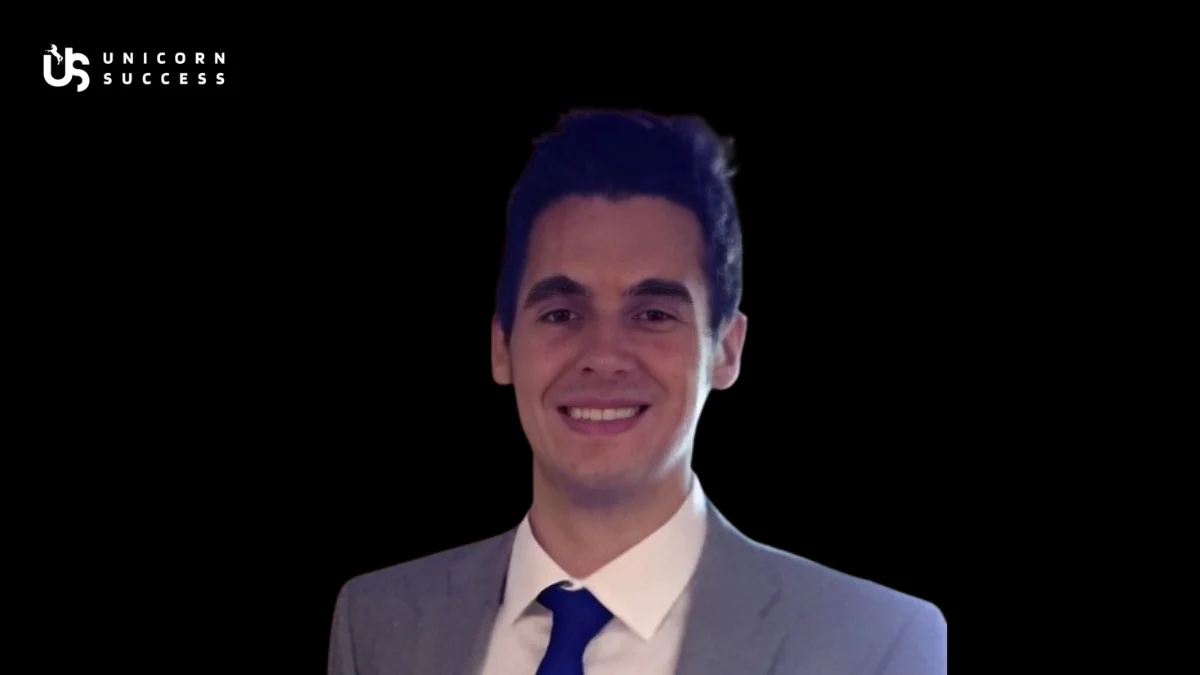
I’m James Shaffer. I run Insurance Panda. We match people with auto insurance quotes. But the real problem we solve is confusion. Buying insurance is terrible. People hate it. It’s full of jargon, hidden fees, and slimy sales tactics. We step in, strip away the garbage, and give people plain-English answers so they can actually figure out what coverage they need.
The inspiration wasn’t some grand, world-changing vision. It was a glaring market gap. Look at the search results for auto insurance a decade ago. It was a wasteland. You had massive carriers with sites that looked like they were built in 1998, or you had scummy affiliate lead-gen sites that tricked you into handing over your phone number.
No one was just answering basic questions honestly. Lightbulb moment. Give people actual answers, build trust, and then hand them off to a quote engine.
I didn’t have a background in insurance. At all. I knew SEO. I knew digital marketing. I knew how to rank websites. Not knowing the insurance industry was my biggest advantage. I didn’t have the curse of knowledge.
If an actuary writes an article about bodily injury liability, it reads like a legal contract. Because I didn’t know anything, I had to figure it out and explain it to myself like a five-year-old. That’s exactly how our users needed it explained. We won by sounding human.
The First Moves
Getting the first customers was a grind. Pure, unadulterated SEO. We didn’t do cold outreach. We didn’t network at rotary clubs. We didn’t run Facebook ads. We just went deep into keyword research.
We ignored the high-volume stuff. Ranking for “auto insurance quotes” was impossible. Geico spends billions doing that. Instead, we looked for long-tail, stupidly specific questions. “Does my insurance cover a shopping cart hitting my door?” “Can I insure a car not in my name?” Thousands of these. We wrote the absolute best, most definitive answers to those questions on the entire internet.
Traffic started trickling in. One visitor a day. Then ten. Then a hundred.
Our business model was simple lead generation. We capture high-intent organic traffic and route it to quote providers. We get paid per lead or per click. Has it changed? The core model hasn’t. But the execution is ten times harder now.
You can’t just throw up a 500-word article and rank. You need massive domain authority. You need digital PR. You need technical SEO that is completely flawless. The barrier to entry is astronomically higher today than when we started.
Also Read: How Luisa Zhou Built LuisaZhou.com Into a $1M+ Online Coaching and Education Business in 11 Months
Reaching $1 Million
Everyone lies about their timeline. They want you to think it was an overnight success. It wasn’t.
Months 1–6: Pure silence. Crickets. I was writing articles into a black hole. We made zero dollars. Months 6–12: We started seeing trickles. A few bucks a day. Enough to buy a decent lunch. Year 2: We hit low six figures. The long-tail strategy was finally compounding. Year 3: The magic million.
The biggest turning point wasn’t a PR stunt. It wasn’t a viral campaign. It was a Google core algorithm update. One of the big ones. Google came through and absolutely slaughtered our low-quality competitors.
Entire businesses got wiped off the map overnight. Because we had spent two years obsessing over quality and user intent instead of just spamming backlinks, we survived. Actually, we thrived. Our traffic doubled in a week. That was the moment I knew we had a real business, not just a lucky website.
Our marketing channels? 100% organic search. Period. Paid ads in auto insurance will bankrupt a bootstrapped startup. Cost-per-click for insurance keywords is insane. $40, $50, sometimes $80 a click. You cannot compete with Progressive and State Farm on paid ads. We played the long game. We built an organic moat.
Challenges & Lessons
Challenge one: Google. Always Google. You are building a castle on rented land. Every time they roll out an update, your heart stops. We overcame it by diversifying our content types and constantly auditing our site architecture. You have to adapt to their mood swings.
Challenge two: Content scale. Finding writers who actually understand insurance is incredibly hard. Most freelance writers just rewrite the top three search results. That’s useless. We had to build a rigorous training program. We had to hire editors who were merciless. If a piece of content didn’t add original value, we trashed it.
Challenge three: Cash flow. SEO takes months to pay off. You have to float the content costs, the hosting, the development—all before a single dollar comes back. I bootstrapped this. I lived cheap. I reinvested every single dime back into the site for the first two years.
Did I want to quit? Plenty of times. Usually after a traffic drop. You wake up, check your analytics, and see a 20% dip. It ruins your week. You push through by looking at the fundamentals. If your content is good, if your tech is sound, you wait it out. Panic is expensive. I learned to stop checking analytics every hour.
Mistake early on? Cheaping out on technology. We used budget hosting. During our first big traffic spike, the server completely melted down. The site was offline for a day and a half. We lost thousands of dollars in revenue and tanked our rankings temporarily. Brutal lesson. Buy good servers. Don’t skimp on tech infrastructure.
Insights for Founders
Here is what no one talks about. Hitting $1 million in revenue is completely anticlimactic.
You think you’re going to pop champagne. You think you’ve made it. You haven’t. You just have more expensive problems. A million in revenue doesn’t mean a million in the bank. You have payroll. You have server costs. You have taxes. It’s a vanity metric. People obsess over the top line. Profit is what actually matters. I felt more relief hitting my first $100,000 in pure profit than I did hitting $1M in gross revenue.
My role changed drastically. I went from doing everything—writing the code, writing the articles, doing the keyword research—to managing a machine. I hated it at first. I like being in the weeds. But you have to let go. If you are doing tasks that you can hire someone to do for $30 an hour, you are limiting your company’s growth. I had to learn to build systems. SOPs. Editorial guidelines. I became an editor and a strategist instead of a writer.
If I had to start over? I would build an email list from day one. Relying entirely on organic search is terrifying. You need an owned audience. We didn’t start capturing emails until year three. We left massive amounts of money on the table because we were completely dependent on Google’s good graces.
Also Read: How Dimitar Dechev Built Super Brothers into a $1M+ Licensed Home Services Business
The Present & Future
Today, we run a very lean team. I like it that way. High revenue per employee. No corporate bloat. Our current focus is maximizing user experience. Google is heavily prioritizing how users interact with a page. Does it load instantly? Is the answer immediately visible? Do they bounce back to the search results? We are obsessing over page speed and conversion rate optimization.
Next up? Expanding our content silos. We are going deeper into very specific state-by-state insurance laws. It’s tedious work, but it’s where the value is.
Do I still feel connected to the mission? Yes. Insurance still sucks. It’s arguably gotten worse with inflation driving up premiums across the board. People are desperate for ways to save money without compromising coverage. We still make that process slightly less painful. That keeps me going.
Advice for Others
My best advice for hitting your first $1M? Pick one channel.
Stop doing TikTok, and SEO, and Facebook ads, and cold email, and podcasting all at once. You will fail at all of them. You’ll be mediocre across the board. Pick one single acquisition channel and master it completely. For us, it was organic search. We ignored everything else until we hit that million-dollar mark. Focus is a superpower.
Books? I don’t read much business self-help. Most of it is survivorship bias written by people who got lucky once. Read biographies instead. Read about how Rockefeller built Standard Oil.
Habits? It’s boring. Wake up. Look at the data. Find the bottleneck. Fix the bottleneck. Repeat. Discipline scales. Motivation doesn’t.
Bonus
Here is a hard truth. Growth hacks are a myth.
There is no secret tactic that is going to 10x your business overnight. Everyone is looking for a shortcut. A new plugin. A new AI tool. A new script. It’s all noise. The real secret is just doing the boring work longer than your competitors are willing to do it.
Our competitors would write ten articles on a topic and stop. We wrote five hundred. They got bored. We didn’t. Business isn’t about brilliance. It’s about endurance. Stop looking for the easy way out and just do the work.
Also Read: How Jamie Maltabes Built Infinite Medical Group into a $3M Wellness and Regenerative Health Brand
Inspired by James Shaffer’s journey building Insurance Panda into a $1M+ organic search business? Share this story with a fellow founder. It might be the push they need to stay consistent, master one growth channel, and build something that compounds over time.
At Unicorn Success, we spotlight fearless founders and Zero to Million . Have one of your own? Submit it through our contact form—your journey could inspire entrepreneurs around the world.
