

How Rick Elmore Scaled Simply Noted Into a $1M+ Handwritten Notes Platform in 3 Years
In this interview, Rick Elmore, Founder and CEO of Simply Noted, shares how he built a multi-million-dollar handwritten notes platform by solving one of the biggest problems in modern business: making customer relationships feel personal at scale. From cold outreach and manually landing early clients to building proprietary robotics technology with multiple patents pending, his journey shows how persistence, innovation, and relationship-driven marketing can turn a simple idea into a scalable national platform.
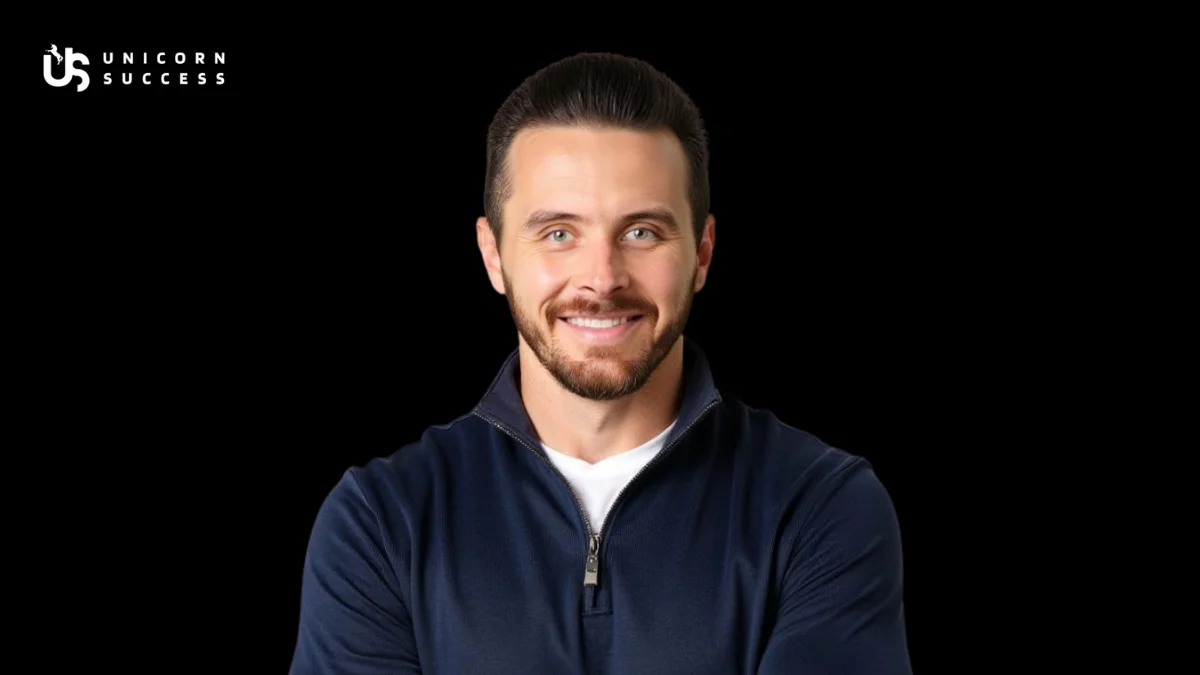
Tell us your name, your company name, and what your business does.
I’m Rick Elmore, Founder and CEO of Simply Noted. We built a platform that lets businesses send real, handwritten notes — at scale.
Not printed fonts that look handwritten. Not digital facsimiles. Actual ballpoint pen pressed into paper, written by proprietary robots we designed ourselves from the ground up. We hold six patents pending on the technology. When you hold one of our notes, the ink smears slightly, there’s real pressure in the strokes, the pen lifts and lands the way a human hand does. People genuinely cannot tell the difference.
The problem we solve is simple: businesses lose customers because nobody feels remembered. A $50,000 deal closes, and three days later the client gets an automated “Thank you for your purchase” email. Nobody’s impressed. Nobody feels special. We give businesses the ability to make every customer feel like they got a handwritten note from the owner — because they basically did.
What inspired you to start this business?
The idea came out of an MBA marketing class in 2017. My professor made an offhand comment that stopped me cold: handwritten notes have a 99% open rate. I wrote it down and couldn’t stop thinking about it.
I was a former NFL player who had moved into pharmaceutical sales after my football career ended. I understood relationships. I knew what it meant to earn someone’s trust. But that stat — 99% open rate — was something else entirely. Email gets 20% on a good day. Text messages get ignored. But a handwritten note? People open it every time.
Did you have a background in this industry before starting out?
Zero background in hardware, robotics, or manufacturing. None. I was a former athlete turned sales guy. What I had was sales instincts, a bias for action, and enough stubbornness to figure out what I didn’t know.
The skills that helped most? Outreach and persistence. In the early days, the product was imperfect. The robots had bugs. Quality control was a nightmare. What kept us alive was my ability to sell the vision, retain early customers through sheer relationship capital, and iterate fast.
How did you land your first few customers or clients?
Cold outreach. Old school. I made a list of industries where personalization matters most — real estate agents, insurance brokers, mortgage lenders — and I started calling, emailing, and visiting. I sent sample cards with a short note explaining what we did.
The sample was the pitch. Once someone held our card, read the handwriting, and realized it was done by a machine, the conversation changed entirely. They’d flip it over, look at the ink, say “Wait, this isn’t printed?” That reaction closed more deals than any sales deck ever could.
Our first real clients were real estate professionals. They already believed in handwritten notes — they just couldn’t do them at scale. We solved that instantly.
What was your business model when you started — and has it changed over time?
Initially it was pure per-unit pricing. You tell us what to write, who to send it to, we handle everything — the card, the handwriting, the envelope, the stamp, the mailing. All-in-one. We charged around $3–$4 per note.
Over time we layered in subscription and credit-based plans, API access for developers, Zapier integrations for automation workflows, and now our full proprietary platform called HIVE. HIVE lets clients design cards, select handwriting styles, set up automated mailing triggers, and manage everything in one dashboard.
The model evolved from “we’ll do it for you” to “here’s a platform you can run yourself” — while keeping the physical fulfillment fully handled on our end. That combination is rare and extremely hard to replicate.
What was your exact timeline to $1 million in revenue?
We launched in 2018 in Tempe, Arizona. The first year was brutal — building the technology, troubleshooting robots, figuring out supply chain, all while trying to close customers. Revenue was modest.
Year two, once we got quality consistent, growth started accelerating.
We crossed $1 million in annual revenue around year two to three.
It wasn’t a moonshot — it was steady, compounding growth driven by repeat customers who kept ordering more. Real estate teams would start with 500 cards a month and scale to 5,000. That flywheel builds.
What was the biggest turning point in your growth journey?
Two things happened around the same time and together they changed everything.
First, we landed our first enterprise-level client — a national real estate brand that wanted to send notes to every new lead, every closed deal, every anniversary. That one account did more monthly volume than our entire base had been doing before.
Second, we started getting inbound from HubSpot, Zapier, and other platforms because people were searching for handwritten note automation integrations. SEO and word-of-mouth started compounding. We weren’t just a local service anymore — we were a national platform.
What marketing channels or strategies worked best for you in getting to $1M?
Cold email and direct outreach, full stop. I’m a sales guy at heart and that’s what worked. We also leaned heavily on sending sample cards — the product sells itself once it’s in someone’s hands, so getting samples in front of the right people was always the highest-ROI activity.
Content marketing and SEO built slowly over time and started paying dividends in years two and three. But the early dollars came from pure hustle — not algorithms.
We also benefited enormously from existing customer expansion. Our best marketing was just doing great work. A real estate agent tells five colleagues. One of those colleagues is the top producer in their brokerage. That word-of-mouth chain is hard to replicate with ads.
What were the top 3 challenges you faced while scaling?
Technology and quality control — We were building custom hardware from scratch. Robots break. Ink runs out mid-job. A batch of cards goes out slightly off-center. Early on, this was a constant problem. We had to develop internal QA processes that could catch errors at scale without slowing down throughput.
Hiring people who could own their domain — Going from solo founder to a team of 11+ people means you have to genuinely let go. That is harder than people admit. I had to learn to hire people smarter than me in specific areas and trust them to run with it, even when I disagreed with their approach.
Educating the market — The concept of handwritten notes at scale sounds like a contradiction. Half our early conversations were spent convincing people it was even possible. We had to constantly demonstrate before we could sell.
Was there a moment you felt like quitting? How did you push through?
Early 2019. We had a hardware failure that wiped out a significant order for a major client. We had to reprocess thousands of cards manually. It was expensive, exhausting, and embarrassing.
I remember sitting in the production space at 2am thinking “what am I doing.” But then I thought about the clients who stayed loyal through it. The ones who called and said, “It’s okay, these things happen, let’s keep going.” That told me we had something real. People don’t say that unless they genuinely value what you’re providing. I held onto that.
What’s one mistake you made early on that taught you something invaluable?
Underpricing. I was so afraid of rejection that I priced below what the value warranted. When I raised prices, I expected pushback. Almost none came. What came instead was a better quality of client — less price-sensitive, more committed, more likely to scale.
Price is a signal. If you price low, people assume the product is low-quality. We were competing against email, which is free — and we were still winning, because handwritten notes produce results that email never will. I should have led with that confidence from day one.
Read More: How Jamie Maltabes Built Infinite Medical Group into a $3M Wellness and Regenerative Health Brand
What’s one thing about hitting your first $1M that no one talks about?
It doesn’t feel as transformative as you imagined. You’ve been running so hard, so fast, that when you look up and realize you crossed the milestone, you’re already onto the next problem. The goalpost moves immediately.
What I wasn’t prepared for was the weight of responsibility that comes with it. Employees depending on you. Clients depending on you. The business takes on a life beyond just your ambition. That’s the part nobody explains.
How did your role evolve as the business grew?
In year one, I did everything. Sales, operations, customer service, quality control. By year three, my job became making sure the right people were in the right seats, that systems existed to replace me as the single point of failure, and that I was spending time on vision and growth instead of execution.
The hardest thing to let go was sales. I’m a salesperson by nature. But the business couldn’t scale if I was still the one making every pitch.
If you had to start over from scratch, what would you do differently?
Hire faster. Delegate earlier. Build systems before you need them, not after you’re drowning.
I also would have invested in content and thought leadership much earlier. The compounding returns on SEO and content marketing take time to materialize — if I’d started earlier, the flywheel would have been spinning harder by the time we needed it.
Where is your company today — and what’s next?
We’re a team of 11+ full-time employees, fully self-funded, no debt, no investors. Simply Noted serves clients across real estate, insurance, non-profit, franchise, B2B, hospitality, healthcare, and financial services.
We launched HIVE — our fully custom-built proprietary platform — which replaced our old Shopify-based system. HIVE gives clients a full suite of tools: card design, handwriting style selection, QR codes, automation triggers, mailing tracking, templates, and API access. It’s the most sophisticated handwritten notes platform ever built.
Next? We’re pushing deeper into enterprise automation, building more integrations, and continuing to expand our proprietary technology.
What are you currently obsessed with or optimizing in your business right now?
Automation and AI — specifically how AI can help us serve clients better, generate smarter outreach, and help our team do more without adding headcount. We’re also obsessed with our client onboarding experience. The first 90 days of a client relationship determines whether they stay and scale or churn. We’re investing heavily in making those first 90 days exceptional.
Read More: How Andrew Hanson Built Cityscape LLC into a Multi-Million Dollar Real Estate Business
Do you still feel connected to the mission that started it all?
Every day. The mission was always about one thing: helping businesses build real relationships at scale. That hasn’t changed. If anything, it’s more relevant now than when we started. We live in a world drowning in digital noise — text messages, emails, push notifications. A handwritten note cuts through all of it. We have a 99% open rate on handwritten envelopes. Not 25%. Not 40%. Ninety-nine percent. That number tells you everything.
What’s your best piece of advice for entrepreneurs trying to hit their first $1M?
Do things that don’t scale. Everyone is obsessed with growth hacking and algorithms and viral content. But the fastest path to your first million is doing things that are too manual to be scalable, until you understand what actually works. Then automate it.
Inspired by Rick Elmore’s journey building Simply Noted into a multi-million-dollar handwritten notes platform? Share this story with a fellow founder. It might be the push they need to build something innovative, relationship-driven, and built to last.
At Unicorn Success, we spotlight fearless founders and Zero to Million . Have one of your own? Submit it through our contact form—your journey could inspire entrepreneurs around the world.
Read More: How Tim Alagushov Scaled IRBIS Air, Plumbing & Electrical from Zero to $1M in Its First Year
