

How Subhas Mondal & Swapnil Mondal Scaled Dass Engineering Into a $1M+ Pan-India PVC Pipe Machinery Business
In this interview, Swapnil Mondal, Director of Dass Engineering Pvt. Ltd., shares how a family-run engineering workshop evolved into a specialized manufacturer of moulds and downstream machinery for the plastic pipe industry. From solving a local manufacturing gap in Bihar to expanding across India and eventually serving international customers, the Dass Engineering story shows how technical expertise, product quality, patience, and decades of incremental improvement can build a durable industrial business.
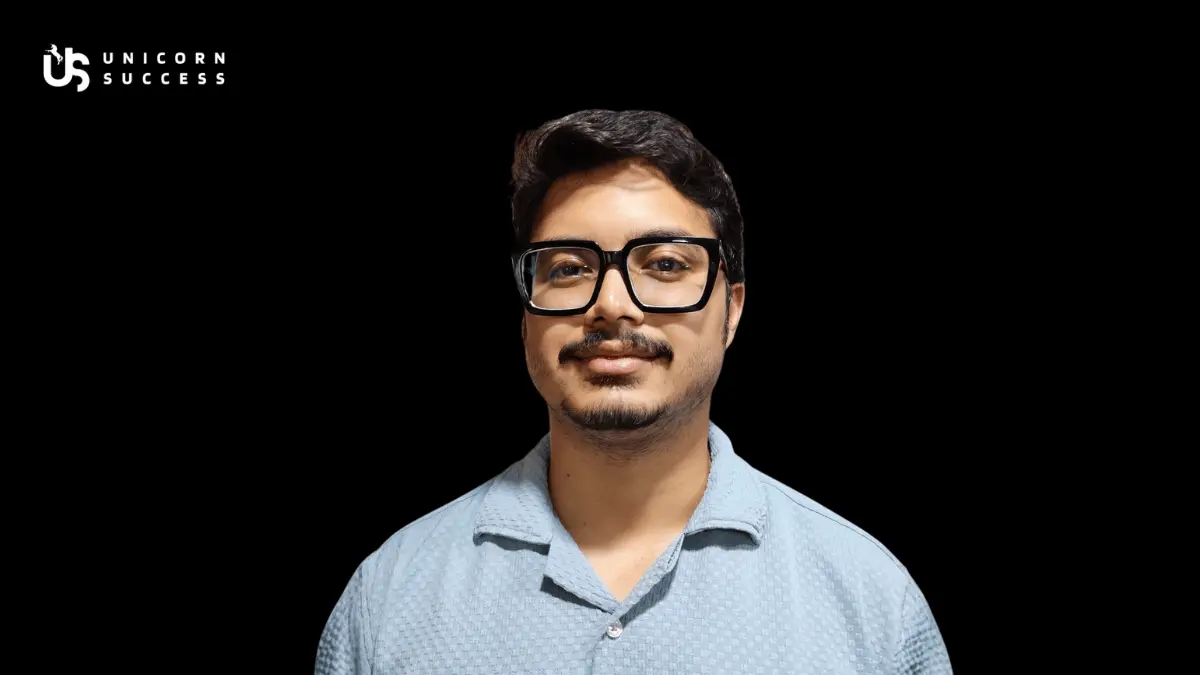
My name is Swapnil Mondal, and I am the Director of Dass Engineering Pvt. Ltd., along with my father, Subhas Mondal.
I have been managing our third-generation family business since 2023, with a focus on modernizing operations and market expansion. Before that, all credit goes to my father for single handedly doing what it takes for a business to be recognised nationally.
My company specializes in manufacturing moulds and downstream machinery for the plastic pipe industry.
My company is located in Patna, Bihar, and finding quality industrial machinery products locally has always been a pain point for this place. And so, the vision has always been to supply certified, long-lasting quality products locally and to the neighbouring states’ pipe manufacturers so as to develop a prominent industrial community in Bihar.
In the process, gradually our company gained recognition in the eastern markets too, then middle India, and eventually Pan India.
Now, by God’s grace, we are currently supplying our products internationally too.
What inspired you to start this business?
My grandfather initially ran a small general engineering workshop, which he started in 1975.
The moment came in 1985 for him when a PVC pipe factory owner in Bihar approached him regarding a die mould set for his factory.
At that time, there were no mould and machinery makers specialized for the pipe industry in India, let alone in eastern India. Hence, the owner had to import the machine from Italy, but as he kept needing accessories for it, continuous imports cost him heavily.
And so, he sought a local mechanical workshop to make those products locally for him.
Eventually, under my father’s guidance and expertise, this company started manufacturing entire machines and moulds for the plastic pipe industry and became one of the pioneer machine makers for the plastic industry market.
What was your background before starting the company?
As mentioned, my grandfather used to run a small general engineering workshop.
So, we already had mechanical equipment, tools, operators, and a basic infrastructure needed for transitioning to a specialized workshop for manufacturing downstream machines for the plastic pipe industry.
Although even after the basic setup was already available, we had to go through a lot of trial-and-error processes to get the product a good market fit.
Learning the technical concepts of extrusion, designing the moulds and machines from scratch, creating a lean supply chain for it, and creating an error-free production line and quality-check process took immense dedication and sincerity.
How did you land your first few customers or clients?
The first few clients came through referrals because, from day one, our mission has been to supply quality, sustainable products.
Also, my company being located in Patna, finding quality industrial machinery products locally had always been a pain point for this place. So, local factories sought manufacturers who could cater to their needs locally.
Even the entire eastern Indian market had no mould and machine maker for the plastic pipe industries present there.
Materials had to be procured from the western side, namely Gujarat and Delhi, which bore heavy transportation costs and high lead times.
All these factors led to the gradual recognition of our company locally, then in the eastern markets, eventually middle India, and finally Pan India.
Obviously, in current times, as competition has gone high and global boundaries have eroded, various channels of marketing are needed to sustain and grow in this industry.
Read More: How Rick Elmore Scaled Simply Noted Into a $1M+ Handwritten Notes Platform in 3 Years
What was your original business model, and how has it changed?
Initially, when we started, we made only die moulds for the plastic pipe industry.
In plastics too, we made moulds only for PVC pipes.
Later, under my father’s guidance, we started making slotting machines because they were technically the most convenient ones to manufacture.
Around 2008, my father entered into manufacturing other downstream machines for the pipe industry, like grinders and pulverizers.
Eventually, we ventured into socketing machines.
And in 2018, we started the line for making moulds for other plastic pipes as well, namely HDPE, CPVC, etc.
This is how the product line kept expanding over time as per consumer demand and needs.
My company’s differentiation has always been the use of lab-tested certified products as raw materials, a rich reputed client base Pan India that helps us build trust, goodwill, and authority over our new customers, and the expertise and experience of 50 years in this industry.
All this has helped us go uphill from day one.
What was your exact timeline to $1 million in revenue?
It is around 4–5 years.
What was the biggest turning point in your growth journey?
I wouldn’t consider any such one incident or event a major turning point in this company’s journey, but rather it has been a cumulation of a series of events, efforts, and small improvements over a span of time that has contributed to this major growth.
I learned majorly from the inputs and teachings my father have given me till date, the mistakes he did that i didn’t have to repeat, the new ventures he started that i need to build on, the sale strategies that he had to learn from scratch, the day to day floor supervision procedures and most important of all, how to run a business ethically so that the society as a whole benefits from it.
Small but consistent and sincere daily actions have led to this day.
What marketing channels or strategies worked best for you in getting to $1M?
It was mostly organic, but a push from online marketing channels and social media has also played its part in reaching this milestone.
Read More: How Abhishek Shah Scaled Testlify Into a $1M+ AI-Powered Hiring Platform
What were the top three challenges you faced while scaling—and how did you overcome them?
The first challenge in this industry is the lack of technical and conceptual standard documents online, which makes it difficult for newcomers as well as old players to learn and grow.
It poses a hurdle to expansion and diversification.
To overcome this, I had to physically visit pipe factories, go around their work floors, understand the working of products visually, and talk to operators and technicians.
The process is very time-consuming and straining, but I got hands-on application and experience of the products, which for me was a far better experience.
Secondly, many pipe manufacturers nowadays chase low prices rather than quality, which makes it difficult to maintain a clean, progressive market.
People go after low prices rather than analysing the reason behind them. This characteristic makes it hard for us to compete in this industry.
To sustain in such a market, certified quality reports, goodwill, and validated testimonials have played a major role for us.
The third problem lies in the dogma of my city and state that has been prevailing for a long time, which is that good-quality products cannot be manufactured here and, for assured products, one has to reach out to Gujarat.
I myself admit that this was the case up until around 2015.
But the way Bihar has grown in terms of roads, industries, and infrastructure in the last 10–15 years is drastic.
People need to see it for what it is today and not judge it for what it has been, and this is where we fail.
Its only solution is to keep building a clean, reputable market with clean work ethics and to keep hoping that one day the reality of this place comes to light.
Was there a moment when you felt like quitting?
There have always been ups and downs, as expected of any business, but I myself never felt an extreme urge to quit my business.
At one time, in 2021, after COVID, when the market conditions were bad, I ventured into a new food business, totally unrelated to my expertise, so as to diversify the income flow.
But I failed in six months and learned many lessons the hard way.
At that time, my father handled this workshop single-handedly.
But yes, never have I felt like quitting this workshop of mine completely.
I love what I do, and I want to keep giving it my best every day.
What’s one mistake you made early on that taught you something invaluable?
It was a mindset mistake of my own, but it had its impact on my business and workshop.
After the COVID phase, the market was very much down. Our financial conditions were not optimal, and this led me to think of other businesses.
I started to feel that my current business was not capable of making my conditions stable.
I ventured into the food business for six months. Failed at it.
Then I went into medical services for five to six months. Didn’t make it there either.
Eventually, after wasting a year on other things, I finally realised that if I had just patiently put more effort and passion into my existing business, which I already had expertise in, rather than all this, I could have made my business and myself more stable and taken it further up.
I lost crucial time, money, and effort in things that maybe didn’t need me and left those things to go on their own that needed my best at that time.
But lessons learned the hard way are the ones that get etched onto you.
What’s one thing about hitting your first $1M that no one talks about?
Definitely overwhelming and joyful from the core.
How did your role evolve as the business grew?
Initially, I managed the technical side of the workshop floor and production.
Then eventually, I went into marketing too.
Also, when needed, I did the final staff hiring and selection process for my factory.
Then, as work grew, we hired marketing and sales staff and delegated the sales job to them.
For finances, we delegated that to a CA firm.
For marketing, we partnered with a marketing agency.
So, as you can see, initially the overall management was done by me and my father, but as time demanded, respective people and agencies were hired, and my father and I kept the critical technical production supervision with us.
If you had to start over from scratch, what would you do differently?
If I had to start over, I would definitely stay more focused on the business and industry where I already had experience and expertise.
As I mentioned earlier, after COVID I spent almost a year trying different businesses because I felt that my existing business might not be enough to make my financial conditions stable. Looking back, I feel that the same time, money, and effort could have been invested in improving Dass Engineering, expanding our products, strengthening our processes, and reaching more customers.
I would also start modernizing the business and focusing on online marketing much earlier. Traditional referrals and goodwill have played a major role in our journey, but today customers also research manufacturers online before making decisions.
So, if I had to start again, I would trust my core expertise more, stay patient, and start building both the offline reputation and online presence of the company from an early stage.
Where is your company today—and what’s next?
Today, Dass Engineering has grown from serving local pipe manufacturers to having a reputed client base across India, and now, by God’s grace, we are supplying our products internationally too.
Our product range has also grown significantly. We started with die moulds for PVC pipes and gradually expanded into slotting machines, grinders, pulverizers, socketing machines, and moulds for other plastic pipes such as HDPE and CPVC.
What comes next is continuing this expansion while maintaining the quality standards that helped us reach here.
My focus is on modernizing our operations, improving our products and production processes, strengthening our market presence, and reaching more customers in India as well as international markets.
At the same time, I want Dass Engineering to contribute to developing a stronger industrial ecosystem in Bihar. That was part of the original vision, and it continues to matter to us today.
What are you currently obsessed with or optimizing in your business right now?
Right now, I am mainly focused on modernization, quality, production efficiency, and market expansion.
In machinery manufacturing, even small improvements in materials, design, production, or quality checks can make a difference to the final product. So, there is always something that can be improved.
I am also focused on how we present ourselves to the market. Earlier, referrals and industry connections were enough to bring a major part of our business. Today, competition has increased and customers have access to manufacturers from across India and even internationally.
So, along with improving what happens inside the workshop, I am equally interested in improving how Dass Engineering reaches and communicates with customers through online marketing and other modern channels.
Do you still feel connected to the mission that started it all? Why or why not?
Yes, definitely.
The original mission was to make quality industrial machinery available locally because manufacturers in Bihar and eastern India had very limited options and often had to procure products from distant markets.
That mission is still very relevant to me.
Even though we have now expanded beyond Bihar, reached customers across India, and started supplying internationally, I still want quality products manufactured here to earn the same trust and respect as products coming from established industrial regions.
I also want to contribute in whatever way possible towards developing a stronger industrial community in Bihar.
So, the scale of the business may have changed, but the basic mission has not.
What’s your best piece of advice for entrepreneurs who are trying to hit their first $1M?
My biggest advice would be to remain patient, stay consistent, and do not underestimate the expertise you already have.
I learned this lesson the hard way.
When things were difficult after COVID, I started looking for opportunities in completely different industries instead of putting my full effort into the business I already understood. Eventually, I realised that rather than constantly looking elsewhere, I needed to improve what I already had.
Also, I don’t think entrepreneurs should always wait for one big turning point.
There was no single event that took us to this milestone. It was a series of efforts, mistakes, improvements, customer relationships, and small but sincere actions over time.
Focus on making your product or service better, build genuine trust with customers, protect your reputation, keep learning, and continue showing up even when growth feels slow.
Small but consistent actions can eventually create very big results.
Read More: How Andrew Hanson Built Cityscape LLC into a Multi-Million Dollar Real Estate Business
Any books, habits, or tools that played a key role in your success?
For me, practical experience has probably been a bigger teacher than any particular book or tool.
One of the most valuable habits has been going directly to the source whenever I need to understand something technically.
Because there is a lack of standardized technical and conceptual information available online in our industry, I have physically visited pipe factories, observed their production floors, watched machines working, and spoken with operators and technicians.
That hands-on learning has helped me understand the actual application of our products much better.
Another important habit is continuous improvement. I believe in observing what can be done better, learning from mistakes, listening to customers, and making small improvements consistently.
And perhaps the most important habit I have developed is staying focused. My experience after COVID taught me that sometimes the answer is not to keep searching for the next opportunity, but to give your best to the opportunity and expertise you already have.
Anything else you’d like to share with our readers?
I would just say that every business has its own timeline.
It is very easy to look at successful businesses and see only where they are today, without seeing the years of trial and error, difficult market conditions, wrong decisions, technical problems, financial pressure, and small improvements behind them.
Our journey has also been like that.
We started from a small general engineering workshop, gradually specialized in products for the plastic pipe industry, expanded our product line according to customer needs, and built our market step by step.
There were mistakes along the way, and I personally lost valuable time trying businesses outside my expertise. But those experiences also taught me lessons that I probably would not have learned otherwise.
For anyone building a business, especially in manufacturing, I would say: respect your expertise, never compromise your long-term reputation just to compete on price, keep improving the quality of your work, and have patience.
You may not see the result of every small effort immediately, but over time, those efforts accumulate.
That has been our journey, and I believe there is still a long way to go.
Inspired by Subhas & Swapnil Mondal’s journey growing Dass Engineering Pvt. Ltd. from a family engineering workshop into a $1M+ plastic pipe machinery business? Share this story with a fellow entrepreneur or manufacturer. It might inspire them to stay focused on their expertise, learn from setbacks, and keep building through small but consistent improvements.
At Unicorn Success, we spotlight fearless founders and their Zero to Million journeys. Have one of your own? Submit it through our contact form—your journey could inspire entrepreneurs around the world.
Read More: How Eugene Lebedev Scaled Vidi Corp Into a $1M+ Data Analytics and Automation Consultancy in 3 Years
